Bend your brain

I have told you before – I love teaching because I learn so much! I know I’m not everyone’s cup of tea as a teacher, but I am proud that my approach has always been that I am teaching the person not the harp. Yes, I’m kinda random. Yes, I talk too much. Yes, I (eventually) get to where that person is and figure out how to get through to them where they are right then.

So, yesterday we had one of the fun, funny moments that arise from being me while teaching. We were at that somewhat rocky place in learning a new tune where there’s a tenuous grasp of what’s going on – and the poor learner is really just clutching at any straw of knowledge. You know that place – when you’re not entirely sure of what it should sound like, which strings you’re supposed to play in which order, which fingers you want to be using, the rhythm (if we can even keep that in mind), what’s coming next … all the things.

So, I did the sort of thing I do – I reached over from my seat and tried to play the phrase. But I was “backward”, near the column so when I tried to get my fingers to work, they were fighting me – after all, they knew what to play. But my eyes were screaming (inside my head!), “NOOOO! It’s the other way!!!” (you know, like your mom yelled when you were learning to drive). There was a great deal of back and forth in my head while my fingers tried to work. I bent my brain!
It was sort of like the Contrary Motion exercises you played when you were young to the harp. That’s when one hand plays up at the same time the other plays down. Except that here it was my eyes going in one direction while my fingers went in the other. Crazy!

But it was good for a couple of reasons. This is a beginning student, and getting to watch me struggle to play something highlights that we’re always learning. And that, no matter how long we have played, there’s always something we could be working on to develop.

The other reason is that it really highlighted to me how, even though I’m always going on about being creative, I had missed a doozy – looking at the harp in a new way (literally). When I had just started playing, I used to turn the harp around, place the column on my shoulder and try to play the tune. I’m not sure when I stopped doing that, but it’s a lot harder now! I had to start a couple of times because I had a disconnect!

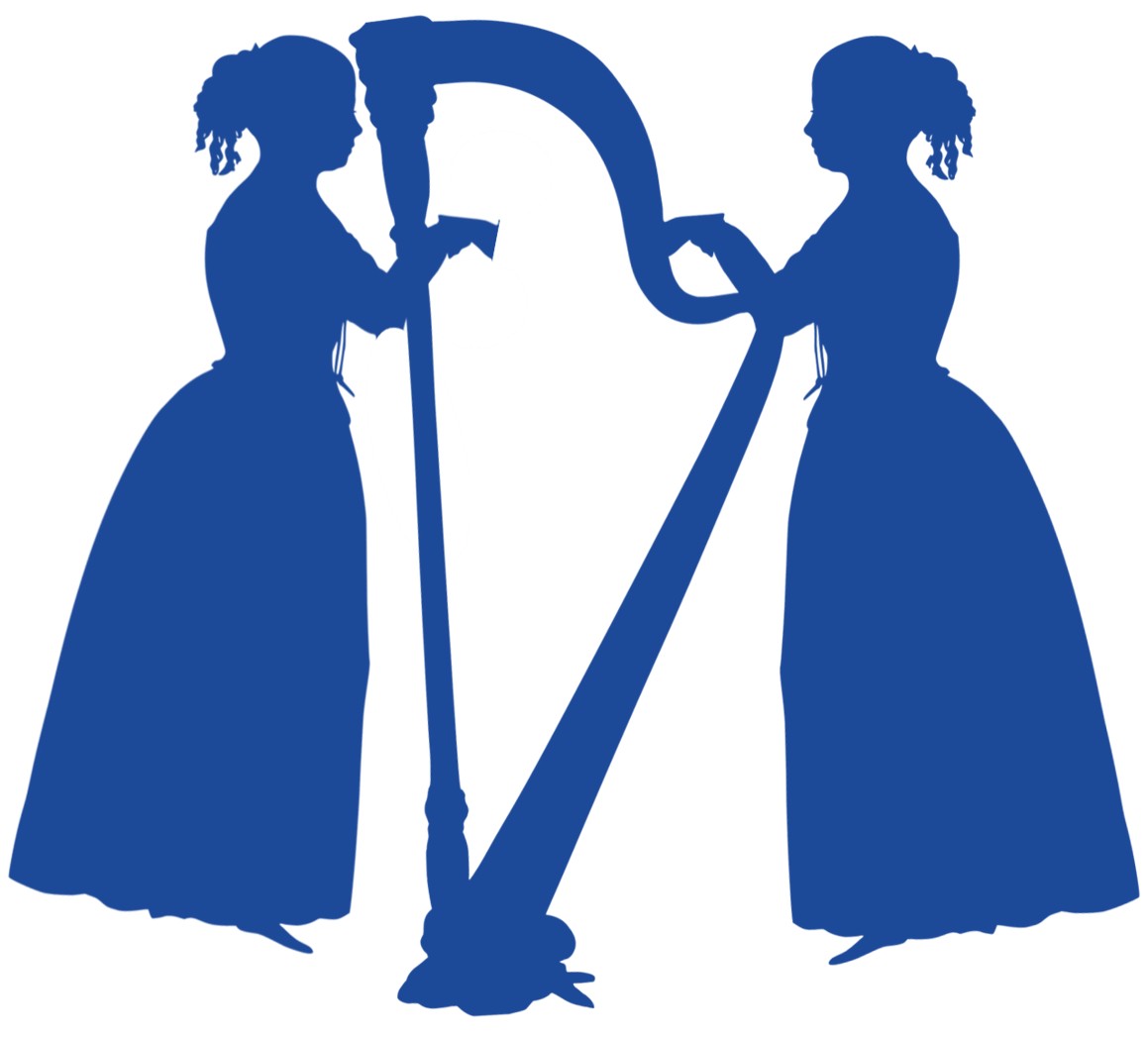
While we were at the harp as I struggled, we laughed and learned and went on. But it struck me how this was such an easy way to develop flexibility and fluidity in a non-threatening way. How can it be threatening when you’re not “playing”, just playing around? The important thing isn’t how well you can play backwards (no matter how many twins at harps or upside-down pianists you see on youtube). Rather it’s allowing yourself to do stuff to push your own boundaries.

So, I’ll challenge you to give this a try. See what happens when you bend your brain. Start with curiosity not expectation – because I promise it won’t be pretty at first. Instead, notice how hard it is at first – and how quickly you adapt. You can try playing something you already know, or you can try to make up something new. It doesn’t matter – it’s about flexing your creative muscles and having a little fun. Let me know how you go!


Bored?

Your brain needs you to be bored to get creative. Unfortunately, our world is always pushing us to be busy, busy, busy. There’s nothing inherently wrong with being busy, but it probably doesn’t deserve the exalted status we have granted it.

What do busyness and boredom have to do with us? When you learn a tune, you need to be thinking about it. You are, in fact, very busy playing your new tune. And since “I can play it” is not the same as “I know it”, we are content to stay seated in the busyness of playing, comfortable in being assured that, like in the rest of life, being busy is the goal.

But, if you want to be creative, to make your music your own (including to make your own music), you need to step out of the comfort of being busy and just let yourself be for a bit. You need to be a bit bored. If you’re busy thinking about playing though, you don’t have time to get bored with it. What are we to do?!

We need to do the same things we did as children. You know, the stuff you did when your mother pushed you out the door and told you to go play. What did you do? I remember spinning in circles, arms outstretched – around and around and around. And laying on the ground looking at the clouds drifting by – giving them names. There’s a dog, there’s a dinosaur, there’s a freight train. Oh wait, the freight train has become a butterfly as it drifted by! Making up games with constantly shifting rules. Poking in the dirt looking for rolly-pollies.

When was the last time you did any of these things? Probably a long while – after all, we’re busy! But reintroducing these types of activities could help spur your creativity and improve your playing. You can do just a little nearly every day and see some strong growth in your harp creativity bringing more to your playing and your music. Added benefit – it will spill over to the rest of your life! Here are some ways to go about it:

  • Go for a walk – make time to wander and let your mind wander as well. Added bonus – it’s good for you too!
  • Put down the phone! Do you remember when you didn’t have your phone glued to you? Recreate that sensation by putting your phone down. If you’re very disciplined, just put it face down. If you’re less disciplined, put it in another room or turn it off all together. It’s ok – it’s only for a little while.
  • Daydream – on purpose. While there’s nothing better than an online meeting to send me daydreaming, you might be more attentive. In this instance, we need the opposite of focused. Stare at a blank wall, unfocus your eyes, let your mind wander. Don’t worry about what you come up with, just wander.
  • Frolic – just play around. Be as childlike as possible at the harp. It’s just you and your playmate (the harp) so make silly rules. Change them and see what happens. Enjoy the process. Laugh! There’s a reason it’s called “playing” the harp!
  • Embrace the discomfort – when you were a kid, being bored seemed like a unique torture. Nothing felt right. But eventually, as you sat with being bored (or loudly decrying it) your mind went to work. So, you have to get through the itchy part. Let it happen, it’s part of the activity.
  • Be a rebel! We’re supposed to be busy all the time so one of the best acts of rebellion is to not be.
  • Value your bored time – amazing stuff can come out of this time, but you have to honor it. Don’t expect genius. Definitely don’t expect measurable productivity! In fact, don’t expect anything (expecting is a very adult thing to do when we’re trying to be more childlike!).
  • Make time – metaphorically (or literally) go out to play. This is time you are investing in you.

Try being bored for a bit and see what happens as you play. Give some of these ideas a whirl and just enjoy being more free. What do you do when you’re bored? Let me know – I need more ideas!

The irony of this post is that I am sitting in a Panera, bombarded by annoying music, drinking coffee, and writing. You knowbeing busy. But I did spend the time as I walked here letting my mind wander – which is how I came up with the idea to write this. And I saw a really cool cloud shaped like an alligator!

Why worry about making a mistake?

I’m afraid that fear is a constant problem for people like us. The talented and often wise John Cleese (of Monty Python fame) said, “Nothing will stop you from being creative so effectively as the fear of making a mistake.”

That is not funny. Just a little scary.

We are often our own worst enemies. We tell ourselves that when we make a mistake, we are just wrong. Instead, we think we are not creative. We are not good enough because we’re not playing perfectly. We avoid errors and we knuckle down at our harps focusing on playing gingerly, so we don’t miss. We harbor a fear that if we were creative, we would play better. We see other people being creative, and we just appreciate their gifts, either because we don’t hear their mistakes or we view their occasional wobbles as charming.

Short of a brain transplant, how do we get around this? Here are a few things to incorporate into our own practice:

  • Acknowledge that mistakes are not failures. Mistakes are part of learning. In fact, not getting where you meant to gives you the opportunity to learn from where you ended up. This can be a fingering conundrum, landing on a note variation, or launching a non-standard chord for example.
  • The reality is that you only find “cool stuff” when you make “mistakes”. Otherwise, you’re just playing the same thing over and over. You do need to pay attention to where you landed and how you got there. Some of your best ideas will only get captured by turning on the recorder and collecting everything that comes out of your harp, good, bad and indifferent.
  • Honestly, there are no mistakes. Sometimes there are elements that are not as pleasurable as others. But with an open mind those become steppingstones to the next ”right” note. Besides, if the music is too perfect, it gets boring.
  • Acknowledge that, like a beautiful single malt whisky, some ideas need to mature to become what you wanted.  Give yourself time for creativity to happen.  Keep in mind that what you see others create is the finished product while you’re staring at the front end of the same process – you don’t know how many iterations your “perfect” exemplar went through before you heard it! Give your ideas time to breathe!
  • Failure – what’s the worst that could happen? I cannot stress enough that this isn’t Rocket Surgery! You’re sitting alone at your harp and something you didn’t intend comes out? Get over it and move on! Unlike the movies, creativity is not going to smite you with virtue…you’re going to have to work at it…and take the good with the bad.

Some of the best stuff ever has arisen from having the wrong levers set, not quite remembering how the tune starts, landing on the wrong chord, or some other “mistake”. Make a beautiful noise! Work with it! And take in stride that nothing that comes out of your harp is a failure!

What’s your best mistake so far? Do you let things happen or do you focus on getting back on track? What would you do to leverage variations when they happen? Let me know – you know the drill!

What’s missing?

Sometimes the universe speaks distinctly, persistently, but quietly. This week in wildly divergent ways, the message was loud and clear – find what’s missing and fix it. That got me thinking…

We often spend all the time we have for making music reading or repeating or being anxious about practicing enough. We make a lot of noise in our heads (and hopefully from our instruments as well). We tell ourselves to focus (and I’m always going on about that here).

But do we ever stop to look around to see if we can find what’s missing?

What’s missing can be from any category but some are less obvious than others. What might be missing?

Well, an easily identified option would be a technique that you haven’t learned yet. You’ll know what these are because you come to a place where you just don’t know what to do or how to do it correctly. Easily fixed – ask someone, take a lesson, practice, fill that hole. Done.

Some of the others are a little more challenging to uncover. These might include –  

Creativity – when you spend all your harp time practicing the stuff in front of you, you don’t have time to poke around, find new stuff, try new things. There’s an easy fix for this – reserve part of your practice time to do just that – poke around and see what happens. Maybe not every day, but a couple of times a week wouldn’t hurt. The challenge is to honor this time and not give it away for “something more important”. This is an essential part of practice. If you think you’re not creative or you’re not composing or arranging, that’s irrelevant – it is important to teach your brain to take what your ears bring in and keep moving forward with the idea rather than just coming to a juddering halt. The path to fixing erroneous notes when performing is right here!

Self-fulfillment – Many harp players are overachievers. Sometimes it is clear that the fixation is on “finishing” a piece rather than enjoying the ride. First the bad news – no piece is ever finished! Now the good news – you will (and should) be changing things over time – your interpretation should develop as you do and as your comfort with the music grows and matures. This development is going to lead to changes – so you’re never finished. And that’s ok.

Giving – you might not believe me, but I sat in my quiet room telling myself I wasn’t good enough to play for other people for a long time. I significantly overestimated what people might be listening for and thereby deprived them of a shared musical experience for much longer than needed. You have so many good things in your head, your heart, and your harp – let them out and give your music away. Play for others – because you will find more things that are missing.

Receiving – the flipside of giving is in receiving. You might be missing the opportunity of receiving feedback from others if you’re not out playing for them. Their responses may fill a gap you didn’t know you had!

Take a moment to look for the areas you are missing. Are you willing to share a peek with us? Let me know in the comments below!

Comments from you:

Boring

I hear you – you don’t (all) love playing scales.

One of the reasons people don’t like to play scales is that they are “boring”. 

Boooorrrrriiiiiinnnnnnngggggggg

Here’s the problem with that thinking – boring is not a bad thing!

Wait, what?

It’s true – boring has some important positive qualities, all of which can make playing easier and better!

What are these qualities? Let’s take a look – they come in two flavors – one cognitive, the other creative.

The first of these – cognitive – means that you do not need to apply your full attention when playing your scales. When you have played something long enough, you have learned (something) about it. It feels like playing is getting easier (we’ve used this metric before!). Eventually it will be so easy you might think it is “boring”. But being bored is a really just a feeling of tedium, not an indication of thinking of the elements of playing. When tedium sets in, you actually have learned enough that your brain is looking for a new challenge. That means you have spare capacity to do or learn more. That’s why we have more complicated versions of each scale as well as other scale related exercises. This is definitely something to pursue. And it can go on forever – because once one thing is easy, there is room for expansion and adding to your effort. Once it’s easy, there’s no end to the things you can do to make your scales more interesting!

The second flavor is creative. When you have achieved an ease of play as mentioned above, you can use that foundation for creative exploration! Being bored is a great place to start when you want to be creative. That same freedom you have from being bored will allow you to come up with new ways to play your scales. Or you can use those scales to come up with new melodies. You can also use these strong scales to come up with varying harmonies – the possibilities are endless!

So, the next time you are thinking your scales work is boring, instead shift your focus. Develop a take on making them more effortless so you have the spare cognitive capacity to take them farther. Or use them as a launch point for creative exploration. Keep in mind that you can also bring the two together – using your freed capacity to be more mindfully creative.

What do you think? Are you going to go for freed capacity or creativity or both? Let me know in the comments!

Ice Cream for Breakfast

It is August so I started thinking – would you eat ice cream for breakfast?

Of course, the “right” answer is no. But that would be a wrong answer.

Because the question isn’t about having ice cream for breakfast every day. Instead, it’s about being flexible to try something new. Something you will likely enjoy. Something that may not be the best choice, but could be a good treat on rare occasion.

Having a treat is a way to go about getting outside your box. Doing something to shake up your routine. Trying something unorthodox to make everything a little tastier (better!). What sorts of things can you do to “have ice cream for breakfast” for your playing? Here’s a few ideas:

Use a different approach – literally. Turn your harp around, move to a new room, play from the column. Just change it up and see what happens.

Ask someone else what they hear – or try to hear it differently. This can be through recording or just listening. Check all your judgement at the metaphorical door and really listen creatively!

Teach it – I am always amazed at how different a tune is when you’re teaching it than when you’re playing it!

Question how things have always been done – never stop asking Why? What? Why not?

Get uncomfortable – ok, really all of this is about getting uncomfortable! A little discomfort can be revealing, freeing, and uncomfortable! And it’s good for you. Just like having ice cream for breakfast could be!

Would you have ice cream for breakfast? What flavor? Let me know – I’m open to trying new tastes and I can’t wait to hear your thoughts!

Answers

Last week we talked about asking questions to encourage our creativity. I hope that you spent the week asking questions of yourself – I know I did! As we said there, asking questions is a great method. The good thing about questions is that they beget one of two things – more questions and/or answers!

Who knew that asking the questions would be the easiest part of being creative?!?

Answers are good to have. Answers describe action. Answers are hard. Answers require us to be brave enough to act.

So, Answers can make you be stuck. Moving forward can be scary. What if we’re wrong? What if our creative idea is a dud? What if we fail?

Well, I can’t assure you that all your creative ideas will be brilliant. But I can help you be brave enough to give your creativity free rein to try! Although there are loads of them, let’s start with five ways to be brave enough for your creativity to shine through:

1. Remind yourself that you are creative. Having doubts? Think about this – every sentence you utter has to be generated from scratch. Each time you say something, you illustrate your innate ability to create (even if you say nonsensical stuff!). You are creative!

2. Size up the risk. It’s not like I asked you to go on TV and perform cold as the entire world watches! What’s the worst that can happen as you sit at your harp at home by yourself? Your rhythm is wonky? You hit some unintended tones? You forgot about reverb and what seemed like a good idea in your head turned out to be the sonic equivalent of baby s**t brown? No one is going to take away your birthday. No one is going to point and laugh. No one is even going to hear you unless you ask them to! The risk of exploring is so minimal as to defy definition!

3. Practice laughing. Here’s a harsh reality – not all your ideas are going to soar. So, when you have a serious creative misstep – laugh about it! (see 2 above – who heard your misstep? That’s right – no one) If a misstep happens alone in a forest, did it happen at all? Only in your laughter!

4. Laugh with yourself, not at yourself. Don’t be your meanest critic. Be nice to you!

5. Being creative doesn’t mean you can’t learn something. Every time you try something and it works – celebrate!! And every time you try something that doesn’t work, you can learn from it. What is causing you to have a gap? Do you need to master another technique? Have you become an idea one-trick pony? Learn what your gap is and then create a way to fill it!

I’m going to be brave enough to stop there – I am sure you have other, better ways to help yourself find the courage to be creative – what are they? Let me know and we can share our epic tales!

Questions?

We are all different. We know that. One could argue, given our proclivity for an instrument very few people every attempt, much less become proficient, we are quite different. Yay us!

One of the major ways we differ from one another is in our fearlessness. Full disclosure – I’m a chicken most of the time. How about you? I am fortunate to be able to hang out with some incredibly fearless people though.

Ok, fearless can mean a lot of things but right now I’m thinking about being brave while being creative with our playing. And on that, we all run the gamut!

We all know of people who somehow rub two notes together and suddenly an amazing, lush, brilliant blanket of sound bursts forward, enveloping us and taking us places we never even dreamed of!

And we all know people who take something beautiful and amplify it, generating landscapes of abundance that leave us breathless!

And then there are those who are tentatively bold, making little nips and tucks but sticking fairly close to the well known – never straying too far from the shore.

And there are those who are small and timid, sticking strictly with the program, using what was given and becoming comfortable, never straying off the beach.

As I read this, it feels judge-y. Its not meant to be – I can’t seem to leave sight of the shore myself. What I do know is that we are all in awe of the first two and may wonder how we get into their lofty ranks! How do we move in that direction (even if we don’t get to the pinnacle)?* Here’s how:

Eileen Gray (architect & furniture designer)**

And right there is the crux of the differences between our boldness and creativity – it’s in the questions we ask. In the questions we think to ask and in those we’re willing to ask.

Here’s the secret – it never hurts to ask a question. And it nearly always opens door to another dimension of thinking about the original question. But if we’re not in the habit of asking questions of ourselves and our music – how do we do it? How do we ask ourselves musical questions and create our own music?

1. Be quiet. Asking questions (even of yourself) will go better if you have a moment to think. Because really, that’s what your question starts as – a moment to think. We often don’t give ourselves this luxury – even when we think we do. Breathe, quiet your mind, focus, and ask.

2. Is this good? isn’t a starting question. When you’re in questioning mode to get your creative juices flowing you don’t need to critique right out of the gate. Just ask – there really are no stupid questions.

3. Ask questions that lead to more questions. What will clarify your thinking and build your creative flow? You don’t want to know if it’s good, you want to know what it’s missing, where might this lead, or how it might fly higher. Don’t stop with the first question you think of, keep going, there’s gold in there.

4. Focus on your thoughts, not the tune. Eventually you’ll need to polish up your ideas, but when you’re asking questions, your focus is on discovery not performance. You can worry about how to make your ideas come out of your harp later. For now, the questions are focused on what might be, could be.

5. Challenge everything. Sometimes the best, most creative ideas get cut because implementation is intimidating (“I won’t ever be able to do 3-on-2”, “My four note arpeggios aren’t good enough”, “I can’t play that fast”, blahblahblah). Just because you don’t think you can do something right now doesn’t mean that you should abandon the questions. Questions lead to creative ideas. Implementation is improved through practice – totally different animals. Grab your ideas – worry about pushing your limits later!

6. What-if is your best friend. What-if has a million possible answers. What-if opens doors, windows, dog flaps, and other entrances! What-if leads to other questions, other opportunities, other ideas, other chances to be brave.

You might have noticed that being brave is a central element here – and you’re right. But let’s leave this here with creativity this week. We can talk about being brave later. As for now – what other questions would you want to ask you as you continue to create your music? If you’re more timid, what questions would you ask yourself this week to push your creativity just a little farther from the shore? Let me know in the comments!

* This is also a continuum – we’re all over the map, there’s no defined categories.

**Source: Eileen Gray: Her Work and Her World

Quiet

Quiet

We all have a lot going on. And inside our heads it can be even busier and more crowded! While all that hustle and bustle might make you feel like you’re accomplishing tons, it can also actively prevent you from accomplishing even more.

We are artists. Yes, we are. If you’re a new musician, you are an artist. If you have been playing a long time, you are an artist. Don’t ever leave your living room or quail at the thought of someone else hearing you? Still an artist!

As artists, we get to create! That is one of the things other people envy us for. Creating is an activity that takes time – and we need to pursue it. But…

If you are never quiet, you won’t have time to be creative.

You need:

Quiet time to have Creative time.

Quiet space to have Creative space.

And perhaps more importantly Quiet your thoughts, so you have time and space to have Creative thoughts.

This is more than practicing. You do need to have a solid base to create but loads of creative time can happen away from the harp. And although you need to have part of your practice time set aside to work on creative ideas, you can have those ideas anywhere. But you’ll be more able to focus if you have quiet.

I won’t lie, identifying – and then honoring – the time you need to create can be a challenge. It’s easy to give that time away to other “important” things.  But this is important – for you, your art, and your life as an artist. But it is a necessity not a nicety.

So, I challenge you to identify specific time that you will be quiet and allow yourself to be creative. It should probably be longer than a shower! (but if that’s the time you have, make use of it!). Make sure you have a way to capture your thoughts (dry erase marker or grease pencil for the shower, don’t ask me how I know this). That way, when you get to the harp you can remember what you had come up with. I have a plenty of short voice memos on my phone for time in the car when things pop into my head – I sing them (badly) into the phone so that I can remember when I hit the bench.

When will you schedule your quiet time? How will you ensure you honor that time? I’m looking forward to your ideas!  Let me know in the comments!

Summer Doldrums…. I’m Bored!

Summer Doldrums…. I’m bored!

It’s the middle of the summer.  Where I live the summer took forever to start.  But once it did start, it came with a vengeance.  So, we were suckered into thinking we would have the kind of summer that was pleasant and easy.  But it’s not.  And that leads to hanging around inside, in the air conditioning, avoiding the 3H weather (hazy, hot, and humid) that comes with living in a reformed swamp. 

When this happens, it’s easy to start to feel stifled and bored. So what should we musicians, artists that we are, be doing about being bored? 

Here are a few ideas.

  • Acknowledge that the weather (and our desire for creature comfort) are stifling and making us a tad cranky.
  • Identify some tasks or activities you’d like to do.
  • Note that these tasks and activities will pull us away from the harp.
  • Be ok with that.  After all, the doldrums don’t actually last that long and shortly you’ll be back to it, preparing for the autumn.

What would those tasks look like?

     1. Do some “meaningful tasks”.  This is a good time to make a list of the holiday music you’d like to start when the autumn comes.  You can make sure you have good sources so that when you’re ready, you’ll be ready.

    2. Do some harp maintenance.  Does your harp need regulation? You could do that now (or cause it to be done).  Sort through your strings and make sure you have a full set of spares.  Update your string chart.  Clear out the pocket of your case. You know, house keeping-y stuff that needs done but is easy to put off.

     3. Play some music games.  Whether it’s Rhythm Bingo or Crazy 8ths, have a little silly fun that is still edifying.  Don’t have those on hand?  Look online for fun music activity games.  Try Eurythmics in your pajamas. Laugh a little.

     4.  Go do a good deed. Go to a local care home and put on a performance.  Everyone descends on them at the holidays, but are less likely to go during summer, so they might enjoy some entertainment in the boring part of their own summer doldrums.

     5. Do a different art. Make a craft, paint, draw, make a video, write poetry.  It doesn’t matter.  What does matter is that a little creativity will go a long way to supporting your harp playing!

There are so many things you can do to weather the summer weather!  Give yourself permission to do something different.  Give yourself a break and come back to your harp refreshed and ready to go!  What will you be doing during the doldrums?  Let me know in the comments!