
I know. There is so much music! Some you must play; some you just want to try. A challenge is good, torture is not.
One of my students popped up with a book of Satie. I was instantly smitten – so much so that I ran out and bought the book too! It has been a while since I played Gymnopédie 1ere, but I know that I love all of them – and this book includes the Gnossiennes as well. Woohoo! Challenge accepted.
But, well, I’m lazy, and these pieces were written for piano by a black-keys-crazed composer. Not too far in, Gnossiennes 1ere was starting to feel like torture rather than a challenge. I kept looking at my piano, knowing that they’re relatively easy over there where they’re meant to be played.
Ugh. It looked a lot like work(!). But no, I wanted to play these pieces on my beautiful, full-throated Dusty. So, I kept at it.
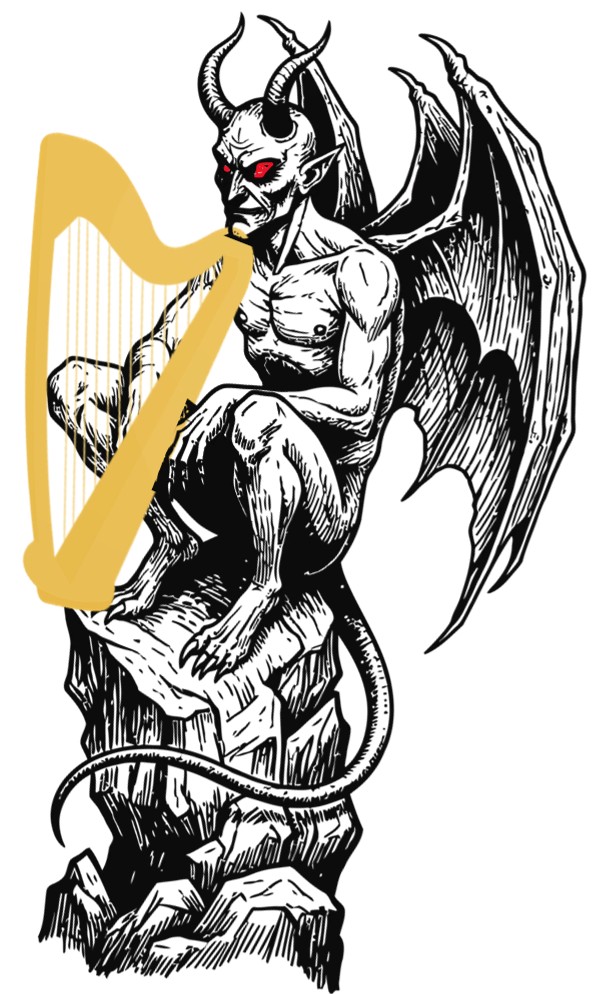
Ok, really, I didn’t keep at it. I “took a break”. Yes, I know, not conducive to mastering the piece. I let the challenge grow – less like Topsy and more like Chernabog in Fantasia. Oh my!
That break finally let my usual advice come into focus. I would never suggest to a student that they plow through the reading – and I too needed to stop trying to stampede through the music. Take a step back, look at the whole, make a plan. That was the only way for me to get all the lever changes in without breaking a sweat, losing the rhythm, and panicking.
When I took that step back, I found that there really are only a few levers to change. They are stunningly predictable. And with judicious markings, I would have no problem getting through the piece, not just intact, but calmly! And with time, beautifully. With that measured je-ne-sais-quoi that it requires.
My dear friend Kris emphatically drills into her students that music is nothing but patterns. As we become more accomplished, we can take on bigger or more complex patterns but they’re still patterns. When we look at a piece as a whole, we start to see the patterns, and more of the real picture emerges. Then we can make a plan for not only how we want to play the piece but also the strategies for getting that message across to our listener. This is the one thing you need to know to get through just about any piece.
So, the next time you take on a piece – be it scary on paper or scary in your ear – take the time to look at the whole. Find the patterns. Think, plan, then attack. It will be a whole lot easier!