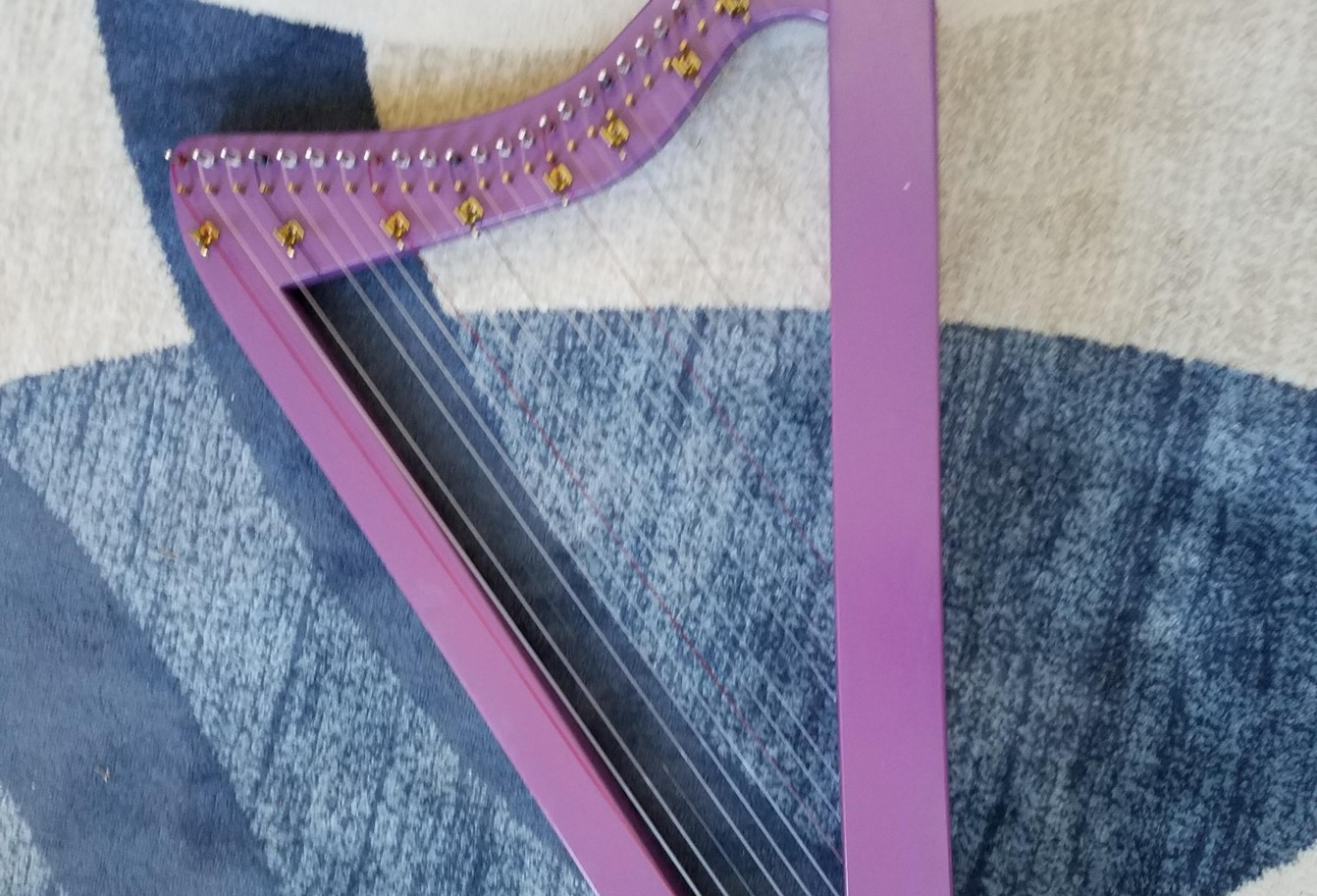
When… you… just… can’t..…get on the bench

It’s nearly the end of March, the time when we feel like it should be warm and glorious. These are the days that beg to be enjoyed. And the weather guesser said it is Spring. And yet, it is cold, dreary, and windy. It doesn’t feel like it will be glorious any time soon. And although the forsythia has bloomed, the ground is still too cold to do Spring-like things. And so, we look longingly out the window, weary of donning coats we’d prefer to take to the cleaner to put away until the winter comes again.

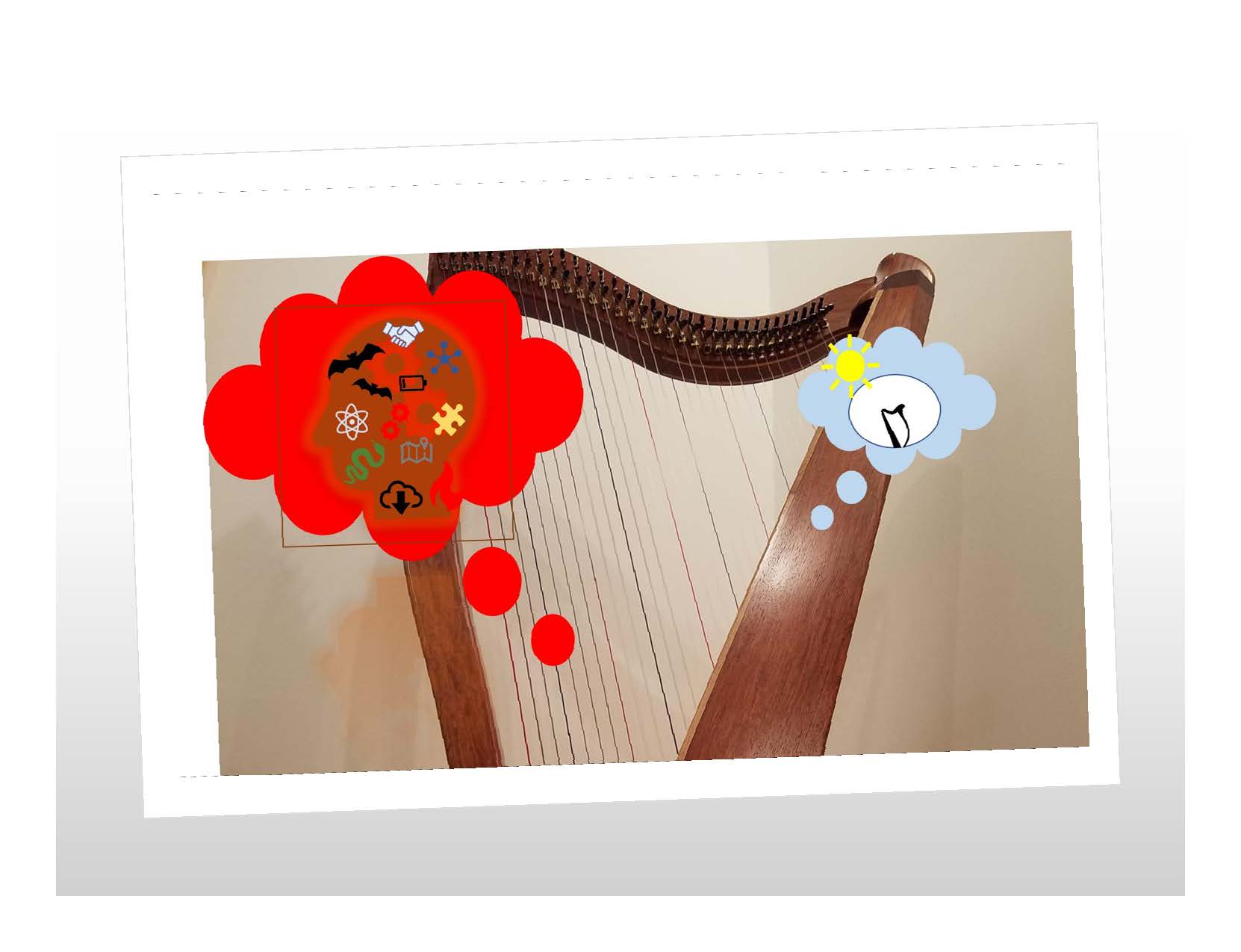
Given this, we should be delighted to stay indoors, in the warm, holding a cup of tea, practicing like mad. And yet, these are days in which it seems very difficult to bear down and practice. Competitions aren’t for weeks and weeks (NB Scottish + Welsh Harp Day is 5 May!).  It’s that lull between the holidays and the mad Summer weddings season. So, why is it that we…just…can’t…even…get to the harp?!? Or if we do get to the harp, we diddle but don’t really practice – why?!?

Maybe it’s inverse cabin fever – or maybe the doldrums of not having anything urgently pressing on our calendars? Or maybe we need the rest?

No matter the reason, this is a time when we also pile on guilt because we know we need to be practicing. But even that doesn’t seem to goad us to action. Let’s face it – we…just…can’t…….get on the bench!

So, how do we get out of this? This is slightly different from your regular practice, if only because you are specifically trying to lure yourself onto the bench. So, it’s more about getting there than being there. Once you get there – you know what to do!

Here are seven ways to help you get to the bench and get moving again:

  1. Make an effort to say hello. No, seriously, walk up and just say hello to your harp. This might seem silly but try it. Humor me. Maybe even touch it. This is especially important if you don’t have a dedicated space for your harp and you must move it to play. Sometimes, saying hello is all it takes to remind you that – why, yes, you would like to play, just a little.
  2. But maybe the simple greeting doesn’t evolve to playing. You could simply sit on the bench. If you are really a hardcore case, convince yourself that you are timesharing – sitting on the bench is a start toward practicing AND it is housekeeping – dusting is important too. So, it could qualify as home care. But, often simply placing your behind on the bench leads to playing.
  3. If the first two haven’t lead to you playing (or left you racked with scandalous guilt), maybe commit to playing for just 5 minutes. Get out your trusty timer, because you wouldn’t want to cheat! Just spend those 5 minutes playing a-n-y-t-h-i-n-g (really – anything!). Make sure you enjoy the time – because it could lead to longer bouts of playing.
  4. Still not making it to the bench? Make a date with your harp. Write it down on your calendar. This is not the time to get up an hour early or to skip dinner. Just make – and keep – a date with your harp. It could be a 5-minute date, you could meet for coffee, it doesn’t have to be long, just be sure you keep the date.
  5. Get a buddy (especially useful if you know someone else in the same boat). Work with your buddy to be accountable. Although this might work best with another harper, your buddy can be anyone trying to be accountably motivated – to exercise, to diet, to read more, whatever. You can help each other by checking in each day to assure you both stay motivated and do what you mean to.  Knowing you’ll be embarrassed to have to tell someone else that you didn’t get to it is very motivating for getting it done!
  6. Accountability buddy too cheesy for you? Be accountable to yourself! Keep a log of your progress.
  7. Plan a treat. While you could give yourself a cookie every time you make it to the harp, a better treat might be to select a piece of music you would like to learn. That might take more time than you’ve allotted at this point, but it could be a nice carrot!

Whatever you choose as a means to help yourself get motivated – the real point is to get you back to playing! And cut yourself a break.  But if it helps, remember that regular practice – even for a short duration – will move you farther along than long, but sporadic, practice. Whatever you do, don’t hector yourself. You’re not quitting after all, you’re just reminding yourself how much you enjoy playing.

The Spring will come, and with the sunshine and longer days, you will look forward to getting back – so use these tips to help pass the time ‘til you get there. Do you have other ways to get yourself back when…you…just…can’t….? I’d love to hear them (in case I need a new way the next time I’m in the same state!).

Mindfulness – Knowing you

Mindfulness is everywhere just now. There are mindfulness apps, there are coaches, and there are plenty of scolds telling us that we need to be more mindful.

This is however, much like so many other things. There is no end to the line of people telling you what you should do. You need to eat low fat low carb clean whatever-is-popular-today. You need to have these countertops, this color cabinets, and definitely not have an avocado refrigerator! You have to wear skinnies, or was it wide-leg? Oops, nope, it’s ankle pants.

There are a lot of people telling you what is right for you. But you probably already know what is right for you!

Mindfulness is the practice of paying attention. Of being “in the moment”. Of focusing on what you are doing right now. Of not being fixated on on what has happened before or what might happen later, but only on what is happening.

And in our current world, it is easy to get caught up in not being focused. And so, there are loads of people willing to tell you how to be focused. But the most important part of mindfulness is knowing you.

You likely already know what works for you. Answers online may help but will not change that essential you.  And if you’re paying attention, you will have a pretty good idea of what you need to work on. Rather than telling you to breathe or meditate or do yoga, I’d like to suggest a few other ways to be mindful during your practice and playing. How do you get your mind to focus on playing the harp rather than on all the other stuff you could be thinking about?

  1. Breathe. Ok, I know I said I wasn’t going to tell you to breathe, but I am always amazed at how many people truly don’t breathe when sitting on the bench. I have gone so far as to draw breath marks into the music or to add a breath into the phrase as I teach a tune. Breathing is something that requires a little attention when you’re focusing on something else (like learning or mastering a tune).
  2. Check in. Just as when you arrive in a hotel, you have to check in so they know you are there and you can get settled, you can check in with yourself – see what baggage you have brought (and leave it on the floor), make sure you are comfortable, that there is enough light, and that you know when your time there will end.
  3. Attend. Actually pay attention to what you are doing. Don’t think about work or what’s for dinner, why you can’t play the same things as Betty Sue, or what you’re going to play for your Carnegie Hall audition in 150 years. Pay attention to what you are doing right then.  Scales? Focus on your fingering, placement, sound quality, and control. If you’re doing etude work, assure you’re getting out of the etude the point of the activity rather than just banging through it.
  4. Be content. You are practicing. This would suggest that you are building a skill, a repertoire element, or a performance package. The key word there is building – developing. Be content that you are making progress. Don’t waste time being upset, chagrinned, angry, or despondent that you have only made as much progress as you have – rather, be content that you have made progress.
  5. Don’t settle. Why yes, this is the tempered opposite of the item above. Don’t settle for anything less than your best effort. Don’t accept sloppy scales, a fumbled second phrase, trailing fingers, or anything else that smacks of not paying attention. Don’t flog yourself but do genuinely work while you’re on your bench. This is a path to being content!
  6. Mind the time. While it would be ever so nice to have four hours a day to practice, that is impractical for most. So be sure you know how much time you’re going to dedicate and use it. Use all of it. But honor your plan and only use all of it, but no more. This will help you be focused on what you’re doing rather than wondering, “How much longer? Are we there yet?”

Of course, you can also have a mindfulness practice of more standard mindfulness stuff – that can only aid your focus when practicing. But you know you – do what works for you.

What other things do you do to help yourself focus and be mindful when you’re on your bench? Leave me a comment, I’d love to hear what you do!

Why don’t you play?

There are loads of reasons we play – all of them good and each holding a key to improving your practice and possibly enjoying playing even more. But sometimes –

We don’t play

We don’t make it to the bench. We can’t d-r-a-g ourselves to the harp. We try, but things get in the way and we just don’t get there.  Sometimes we just don’t want to. Sometimes it’s for a day.  Or a week.  Or much, much longer…

Thinking about why we don’t play can be very helpful (that was pretty obvious!). And knowing why we don’t play might actually be more helpful.

Spend a little time thinking about it – when you don’t play, why is that? There are as many reasons as there are musicians, but here are four possibilities –

  1. Busy-ness. We all have so much going on every day. And there are only so many hours.  And it’s already time for bed, and… I know. I get it. I live there too! Sometimes we don’t realize how much work is required for this love affair with our harps. Or other stuff has crept into our schedule, putting the squeeze on our practice time. Or maybe, when we allow ourselves to sit, to sink into the lovely comfort of the space playing creates, we fall under the spell and spend “too long” there. So, the next time, we tell ourselves we don’t have time.  And soon we’re not practicing at all! But this strategy doesn’t work.  We know we need consistent practice, otherwise we lose ground. Rather than beating yourself up (either for not practicing and for practicing and not getting other things done) – allot, and keep to – a daily, short appointment with your harp. There isn’t much time, but if you could devote just 15 – 20 minutes each day, you would see progress…and still have time to make dinner and watch (insert your favorite TV show here). Make yourself a star chart (like you’d make for your kid’s chores) to reinforce your success!
  2. Fear of Failure. This is such a silly coping strategy, but I see it over and over – you have a gig coming up and need to learn a piece. The date is looming large and you keep putting off starting on it – yikes! And this is a downward spiral because the longer you put it off, the more likely you’ll be right, and you will do badly. But (here’s the insidious part) if you put it off and do badly – at least you’ll have an excuse. It’s crazy but true. So, in that 15 minutes a day you’ve allotted for practice (see above), be sure that about 1/3 of it is devoted to learning something new. This means that you have allotted this time to work on that thing you need to play at that event that’s zorching up but perhaps more importantly – it means you are well practiced at learning new things (so at least that part isn’t scary!).
  3. Overwhelm. I know – playing the harp looked so easy. And when you started – it was. But as you go on, there’s so much to learn, and remember, and work on, and do, and it all requires practice! I mean, really – you must practice tuning and reading and body position and hand position and breathing and melodies and harmonies and phrasing and listening and hearing and – oh, never mind, I’m so tired thinking about it, I’m exhausted – I think I’ll go watch a little tv. You do need to practice all these things and more – but – the more you practice them, the easier they become.  They become more manageable. In the same way, you can manage your practice time. Give it structure. Know what you want to accomplish. Have a plan. You can use a practice planner (like this one) to be sure you know what you will do. You can also ask for help if you’re lost – ask your teacher or schedule a coaching session (I can help) to decide on an approach you can work with. Then you won’t flounder deciding what to practice – you’ll know what you’ll work on, for how long, over how many practice sessions, and when you’ll be satisfied.
  4. It’s that time of life. Sometimes other things take center stage – an change to your family, a new job, a relocation, a new hobby. Or sometimes you just need a break – a change of scenery.  “It’s not you, it’s me” you might say to your harp. Your harp is like a true friend – it will understand your focus has shifted. And like a true friend, it will be there as you go through these changes. And you’re lucky – your harp will be there to give succor and support when needed. Don’t feel badly about not playing if you’re focused on something else. Would your friend (or your harp) deny your new joy? Or reject you when you come back? No – of course not! So, don’t beat yourself up – enjoy your new focus and come back to your harp for those 15 minutes each day or when you’re ready.

There are so many good reasons to play, don’t let a couple of little things derail you. Just don’t let them throw you so far off you feel like you can’t return. And don’t ever think you’re alone – we have all been there – and we’ll be glad when you’re back!

Why do you play?

We all know playing an instrument is “good” for you – impacting brain function, helping you learn more and differently, reducing stress, helping you meet new people, and of course, just having fun. Bud do you ever stop to think about why you play?

The good news – there are no wrong answers to the question.

The better news – there isn’t just one answer (or at least, there doesn’t have to be).

The best news – there is a test and you ace it every time you sit on the bench!

It is likely that we all play for different reasons – our own reasons. It is also likely that our reasons are similar. Perhaps most importantly, all our reasons are good.

But do you ever think about what your reasons are? I mean really think about it. Not the tossed off answer you give to people who gawp when you tell them, “I play the harp.”. Not the easy (and likely irrelevant) answer. I mean the answer from deep inside you. The answer that pushes you to work, to learn, to practice. That (or those) answer(s) hold the key!

Your answers don’t need to come out of your mouth (unless you are an irrepressible extrovert!). Rather, they can be the mind fodder of quiet walks or long drives (like the kind you might make going to the 40th Annual Ohio Scottish Arts School this summer (more on that later)). These answers are worth pursuing because they hold the questions we should ask ourselves each time we practice. Here are a few to consider:

I play for my own enjoyment. This sometimes means “I don’t want to perform”. This answer appears to lead to the easiest practice – if you aren’t working to perform for others, you don’t need to work too hard. But in actuality, this might be the hardest to practice for! If you are the only listener (absent the cat and the curtains), you may discount any progress you show. You may set the bar too high (or too low). Or you might stagnate – playing the same music repeatedly but without feedback you might not be driven to continue to develop, explore and experiment. You must just be sure your practice actually meets the answer – that you are actually enjoying the time at the harp. Don’t stagnate but explore new things to find those that you enjoy most and develop those.

I’m a performer at heart! This might be the easiest answer. People are naturally curious about our instrument and are often in awe of musicians. They may wish to be close so that they get to participate in the experience. You know you can focus on preparing a performance package but be sure to include some “me” time in your practice. Your performance will be improved by including this time. This might include a return to fundamentals for a focused meditative time, revisiting old material and brining a new perspective to it, or dedicating one practice a week to having fun rather than perfecting and polishing.

I like being unique/playing a rare(ish) instrument. This may be the most seductive answer because it doesn’t seem to require much practice at all. To remain unique, you need only say you play and others will still be in awe. You might not defer from playing but you are also not committing to being a performer, so the bar isn’t set too high. But you might be tempted to slack off or cheat yourself out of valuable practice time and the opportunity to do more than scratch the surface and thereby miss so many occasions to surprise and delight yourself! Commit to a more active role in your musicianship – play well enough to let your uniqueness come blazing through your fingers.

I play to put some good in the world. One could argue that doing good requires that you be good – at playing! Whether you do good in the world as a volunteer or as a professional, one off or every day, your practice needs to assure you are strong enough to get through the session and to move about the world with your harp. Include strengthening exercises for your whole body as well as exercises for the “playing parts” (after all – all of you is in this together!).

I play because I must! The harp evokes your soul and emotions in a way no other instrument can, and you are compelled to play it. In addition, the harp is so forgiving to beginners that sitting and evoking is easy. But be sure to practice and master many techniques to assure that you can successfully – and consistently – evoke any emotion you choose, when you choose so that you can meet your need.

There are obviously many answers – these are but a few. No matter your answer, be sure you back it up with a solid practice that permits you to give your best answer! You are going to ace the next test!   What’s your answer?  Leave me a comment and let me know.

Valentine’s Day – Gift for that special harper

Valentine’s Day – just the words can strike fear into the hearts of many! There is often the question of what to give as the perfect present. Who should get those presents? Is it too soon? Is it too late? These are clearly angst ridden questions!  One person we sometimes forget to get a gift for – ourselves!  (If you’re one of those people who goes Christmas shopping, “one for them, one for me, one for them, two for me” – that doesn’t count here! You still deserve a present (or two!)).

You should get yourself a gift that reflects your love of your instrument, your talent and your time. Here are some ideas* (because you want to give a good gift!):

  1. Buy some lessons. The time and money you invest in becoming a better musician and a better harper can only be time and money well spent. It is, after all, an investment. So, really, it’s a gift that will keep giving for years. If you don’t think you need lessons, you might invest in a “tune up” or some coaching. Most teachers will offer this type of lesson too (be sure you explain what you’re looking for before going). Coaching can also be done via Skype (or similar app). I also offer an “executive” lesson which is an intensive full day for a special price. You know you can find me here.
  2. Have some work done. When was the last time you had your harp regulated? Your friendly neighborhood luthier can be your best friend – especially if your harp needs repair. And that repair can range from a little TLC to a regulation to a major repair. I am a huge fan of my local luthier – Rick Kemper. If you are near Washington DC, I highly recommend him. And if you’re not nearby – find the luthier closest to you and start baking a batch of cookies to woo them!!
  3. String yourself along. Check your string chart and your string stash. Do you have an entire spare sting set? Are you keeping your string chart up to date? When you replace a string, do you replace the replacement? You never know which string will break next and you want to be prepared!.
  4. Buy some music. Sometimes people are surprised to hear me, the purveyor of aural teaching and learning, say this. But – I have loads of music. I have harp music but I also have fiddle books, pipe books, piano books, and I just discovered I have a saxophone book (no clue – I’ve never played that – but it has some fun tunes in it!). Books are full of reminders of the music and they are a great way to find new material, learn something new, go in a different direction, or work on your sight reading.
  5. Acquire a new harp! This doesn’t even need an explanation! Do you know how many harps is the  right number to own? One more!!
  6. Buy some harp bling. Given that it’s a relatively small market, there’s loads of harp bling available. I am a big fan of the stuff I have and I find that my favorite piece is an excellent business card because people ask if I play and that starts the conversation.
  7. Get a manicure. You might think manicures are all about filing and polishing, but I find the best parts are the massage and the moisturizing. Massage – yumm! And it’s winter, so take care of your skin (especially important in the current flu epidemic). Enough said.
  8. Get some new walking shoes. What? You know that taking care of you in the global sense is good for your harp playing so just get out there! And if it’s been a while, get yourself some good walking shoes so you enjoy it more, and get out for a walk more often.
  9. Sign up for a workshop. Workshops are an excellent way to learn because you get to work with someone you to whom you likely don’t have ready access most of the time. They’re typically taught by “names” who are darn good musicians and amazing teachers. I’ll be detailing some of my favorites later when I line up summer vacation ideas. Remember that workshops are offered at competitions and by organizations so take ‘em when you can get ‘em!
  10. Start a new journal. Capturing your ephemeral progress in some tangible way will help you immeasurably. To capture your progress you’ll have to think about what you have done, where you’re trying to get and how you might make the journey between then. It also means you have to recognize your hard work. On bad days, leafing through it can rekindle your hope and focus, and on good days it makes patting yourself on the back so much easier because you can see in one place how hard you worked and that you truly deserve a reward. Whether you write it down, do audio recordings, draw it, scrapbook it – you will be glad to see that you’re not making it up – you are developing as a musician!

Enjoy your Valentine’s Day and giving that special harper in your life a lovely gift.

Storytelling

The last bit of self care for November is injecting more of yourself into your music.

Like a lot of music, holiday music tells stories. And like other music, it can get trite pretty quickly, especially since you get to play it repeatedly but only for a few weeks.

One of the easiest ways to infuse life into the music (to alleviate boredom) is to become a storyteller with the tunes.  Think about the words (what could be easier – they’re all right there to read!) –

  • What is the mood?
  • Where does the story go?
  • Who is in the story?
  • What is the action?

Decide the story you want to tell – and use the music to share that story with your listeners. You have all sorts of tools to tell your story – tempo, dynamics, techniques (p.d.l.t, harmonics, damping, ornamentation, arpeggiated chords, etc.).

Modify your arrangement so that you and your story come shining through. And each time through, the tune can be a different chapter of the story.

Stuck? Not sure how to start? Try this: Play Twinkle Twinkle Little Star. Now play it angrily. Now play it playfully. How about impishly?  What about as a march?  Now as a great tragedy. Finish it as a lullaby or as Wagnerianly as possible.

Make yourself laugh…or cry… or feel pain! Relax and enjoy the story!

Practice Practice Practice (your self care)

It is all well and good to work on self care – you can get a (single) manicure or journal your practice once, but it is consistent practice of a self care routine that will bring you the most benefit. So, yes, you must P-R-A-C-T-I-C-E your self care! (stop – I see you thinking, “Oh great, something else she wants me to practice!”)

But self care that is only as frequent as a treat or something you only get when you occasionally remember isn’t self care at all. So you will need to practice getting your self care into your schedule – and keeping it on the calendar. That way you will not only develop the habit but will likely come to look forward to the time you will spend.

You already know how to get something onto your calendar. And you already know that you are more likely to honor an event, especially with yourself, if you actually place it on your calendar. So, get out your pen and get marking. Select self care events that you can actually accomplish repeatedly. Going to polish your nails?  Choose a day of the week to do it and schedule the 20 minutes it will take.  That way you are consistent and get it done. Putting moisturizing lotion on the backs of your hands every day?  Write a reminder on your mirror (use dry erase marker!) so that you see it every day and you begin to build the habit.

As the time passes you’ll notice that choosing small self care events allows you to complete them without much angst and practicing that will build a habit that you can sustain. A few of these little things will add up to a successful self care routine that fits into your everyday schedule – and that’s self care you can live with!

Thinking Time – Six ways to make more time

We are all busy. We are often busy telling other people that we’re too busy. We may have created a cult of business.

Of course we have plenty to do – work work, fun work, home work, house work, charitable work, good works.  Oh, and practice!  They all take up our time.

So that sometimes we have time for nothing more.

We don’t even have time to think.

You know what I mean – we have time to think, “Did I pull out something for dinner?” but we rarely have time to thing, “Am I on my best journey to a fulfilling life?”.

And that’s a shame. A lot of our creativity is buried in those questions. Of course, a lot of our humanity is buried in the time to think about those (and other) questions.

But having time is really an issue of priority and organization. And working with you. You have to add things like this into your life in ways that will actually work for you – not the way Marie or Brene or anyone else tells you to!

How do you get that thinking time in? You most likely will have to schedule it. Here are a couple of scheduling suggestions:

  1. Take a slightly longer shower. Don’t you find your best ideas come while in the shower? Buy a grease pencil so you can write them down on the tiles (and you can wash them off later!).
  2. There’s an app for that. Download a voice recorder app for your phone. Then you can talk to yourself – and actually remember what you said!
  3. Turn off the radio. If you spend a lot of time in your car, you probably have the radio on – either to hear music you like or to hear unending talking heads expelling pointless (or pointed, depending on your thinking) drivel. Turn it off and use the quiet to think. And if you have some good thoughts – you can record them on the handy-dandy voice recorder you’ve downloaded to your phone!
  4. Turn off the television – need I say more?
  5. Go for a walk. Not only will you get some fresh air, sunlight and exercise, you will have a little time to clear your head and to think.
  6. Get up fifteen minutes early. I know, you already don’t get enough sleep. But this will allow you to drink your coffee and have a little time to reflect.

Simply deciding to make time to think will make it easier. Do it for you.

Don’t Fall to Care for Yourself – Seven ways to take care of your hands

It’s well and truly autumn – the days are shorter and colder and windier and drier. Take advantage of the longer nights – November is a good month to start (or improve) your self-care habits.

To make it easy to start, begin with a painless self-care routine – skin care for your hands. Of course, since it is easy, it is also easy to overlook! Don’t do that!

In the autumn, and throughout the year, your skin takes a beating.  Your skin is your largest organ and plays a central role in defending you against all the yuck in the world – take care of your skin and it will be able to do a better job of taking care of you!

Keeping your skin clean and cared for will make your autumn (and eventually the winter) go a lot easier – so start now!

  • Playing in hospitals, schools, other public places? All of those places should end with a thorough hand washing. But all that hand washing will leave you with dry and unhappy skin and you will note the effects: flaky, dry, tight skin. Be sure to use a good moisturizer – a cream, lotion, paste or oil – whichever works best for you. Slather that stuff on and really work it in….
  • Which means you will be giving yourself a massage – also good for your hands. Be sure to include your wrists and forearms – really work that moisturizer in and you’ll get a delightful massage for free!
  • You already keep your nails short but be sure to keep them filed, not just cut. And don’t forget to moisturize your cuticles so they will make it through the cold seasons without breaking or bleeding.
  • Exfoliate your hands too. This doesn’t have to be with lava pumice – there are loads of online recipes or you can just mix a little baking soda into your regular wash. Pat dry and then moisturize.
  • If you get hangnails – act quickly to assure they don’t bleed, crack, and peel. Be gentle, soak it (or wash dishes first – might as well multitask!) and then cut the hanging part off (not too close!).  Apply Vitamin E oil after patting dry. You can buy it in a small bottle with a roller ball which makes application neat and it locks in moisture.
  • If your skin splits you can use superglue to close it. I have used this and it not only helps it heal but the layer of glue seems to protect your finger even while you’re playing.
  • You can also treat yourself to a manicure – seems like a fresh coat of polish makes all of us be just a little more careful of our hands, at least for a little while!

You work your hands hard so be sure to take care of them as we prepare for winter!

Holiday preparation – bringing order to order

There is no need for chaos if you have been preparing for the holidays…which begin next week!  Especially for us playing events for all the winter celebrations (ok, they’re almost all actually in the autumn, but who am I to fight Madison Avenue?!).  So your preparation should be nearly done.

  • You’ve learned new music
  • You’ve repolished old tunes and recyclable music
  • You haven’t dropped you regular repertoire
  • You’ve stocked and checked your gig bag (and maybe given it a trial run to be sure it works for you?)

So, what’s left to do?  Well, three more things:

  1. Make a “Day of” checklist so you don’t forget anything.  Put “stupid” stuff on it. Yes, put HARP on the list – at some point you will forget to put it in the car!
  2. Make a set list – be sure to mix up tempos, time signatures, and this time of year, mix up holiday and “regular” music – by the middle of next month your audience will be getting fatigued of “All Christmas, All the time”!
  3. Practice your set list.  This will help you get comfortable with the transitions between tunes (yes, it can be jarring to go from 4/4 to 6/8 so practice that so you can do it smoothly).  This will also help you find what is not working well.  Record it to hear what the audience will experience. And revise as needed.  Also practice breathing, at least between tunes and adding a little space (for both background and feature gigs – silence adds a lot to the rest of the sounds you’re making!).

With all this, you’ll be ready – Holidays will start as the last “ding-dong, Trick or Treat” fades out – be ready!