Category: Teaching and Learning

  • Summer Plans 2

    Somerset Folk Harp Festival

    Not long after OSAS – many of us gather again at the Somerset Folk Harp Festival*. Somerset has become a “must go” event for harp players! It is an amazing 4-day conference celebrating the diversity of music, talent and experience of the folk harp world. Whether you want to focus on one style or type of music, solidify some specific skills, or try out something new, there is something for you. The breadth of workshop offerings is sure to expand your musical horizon. The Exhibit Hall is the best harp and music shopping under one roof you’ll find anywhere on the East Coast. There are daily concerts that will inspire you. I strongly suggest that you plan to come for the whole festival but if you can only swing one day – do it! There are loads of registration options.

    Somerset is coordinated by Kathy D’Angelo and is pulled off by a small but mighty band of people.  But what makes it such a good way to spend your time? Well, I think they answer this well in a section entitled – What is the Festival Like? And the answer is – it’s awesome! It is like a three-ring circus, a harp feeding frenzy, a family re-union, and your wildest harp dreams come true! You get to meet and talk with and play with other people who are also addicted to harp. There’s time to swap “war stories” “craziest wedding stories” and “why I started to play the lever harp” stories. There are loads of good harpy things going on but the one thing that really makes the Festival so great is all the other harpers there! You will have an instant group of best friends at the Festival – including the stars of the harp world. You will find that you can talk with icons just as easily as you would talk with the other harpers in your harp circle. No matter what your level of harp experience, you will be welcomed most warmly and drawn into the family!

    And – did I mention the Exhibit Hall? There’s loads of stuff to try, read through, buy, dream about, plan for, and take home including harps, CDs, sheet music, doo-dads, jewelry, artwork, music stands, carts, and more. And then there are the concerts which are designed to give you a diverse and broad exposure to the non-pedal harp world. There’s Celtic of course, but there’s also lots of other ethnic music, early music, classical, jazz, popular, and many sorts of harps including Paraguayan harps, bray harps, cross-strung harps, wire strung harps, double strung harps, harps with other instruments, and more! Diversity everywhere!

    The workshops are incredible and span a wide range of levels and interests. Some of them are really substantive and challenging – some will pique your curiosity – some will inspire you to play better and some will be an occasion to let your hair down. The worst thing about the workshops is that you cannot take them all.

    You do need to pace yourself! Somerset is held in Parsippany NJ 19 – 22 July and all the details are available at: http://www.somersetharpfest.com

    *once again – all this content (except my gushing and comment) unceremoniously stolen directly from the Somerset website.

  • Summer plans 1

    Although we’re still whinging on about the snow and cold, it’s already April and summer is fast approaching! This month I’ll highlight some of my favorite summer activities. If you want to attend any of these events, you’ll want to get a jump on it so you’re sure to get a place. Few things are worse than being excited to attend a workshop only to find out that it is sold out! I will present them in calendar order. These are events I really enjoy and have learned a lot from. There is no affiliate marketing (i.e. kickback) only the potential benefit of possibility of running into you at one of these events!

    Let’s start with the

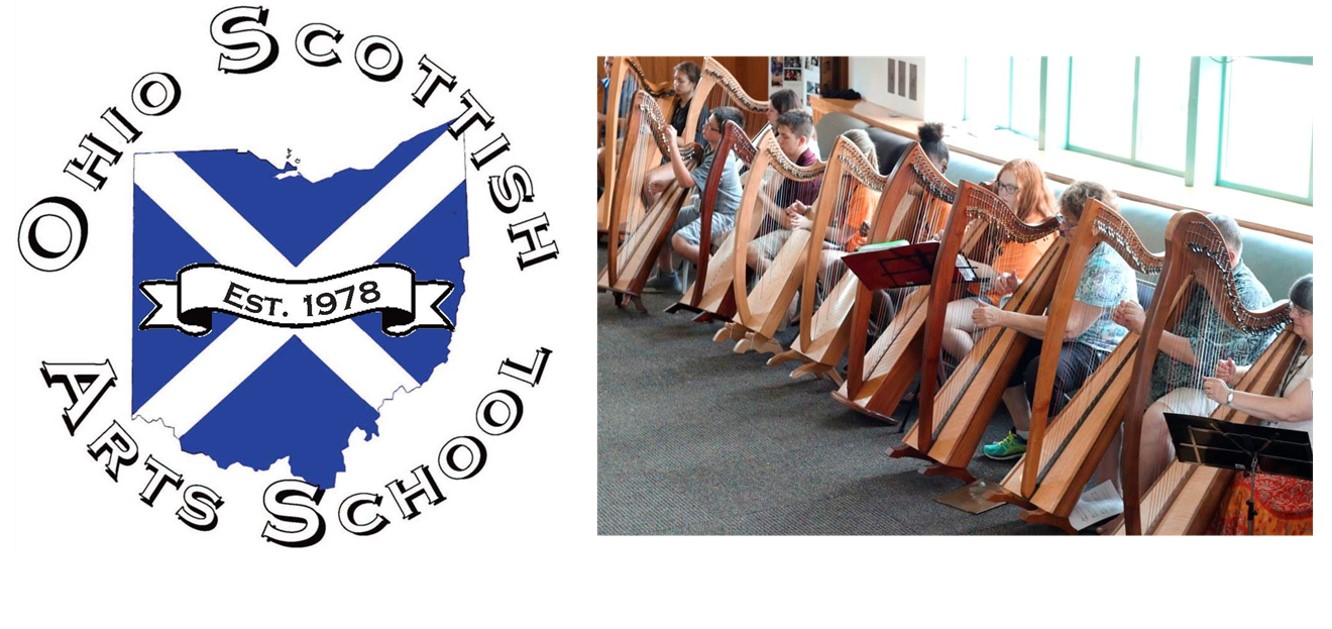
    Ohio Scottish Arts School*!
    This is the 40th Anniversary of the Ohio Scottish Arts School! (you also have the opportunity to help celebrate this momentous anniversary here – donate $40 for 40th Anniversary)

    OSAS has been an excellent hub for meeting the greats (and future greats) of Scottish Harp in the US and UK – some as instructors, some as students (and later as instructors). It is a fun and intensive week. The (harp) classes will focus on basic harp technique (for beginners and intermediates), repertoire at all levels, including tunes for competition sets, Scottish style, including ornaments, lilt, and dance types. Every day you study Scottish dance music, airs, and songs, ornamentation, Scottish style, accompaniment, and learning by ear. Each day there are lectures, practice time, and playing in sessions. If you play the harp, there’s a class for you! Classes are available for beginners (who have played for a few months), as well as intermediate and advanced players.

    In the evenings there are activities (and snacks!) and you can always join (or start) a session. The harpers have become spoiled by the students of Ringgold Middle and high schools who prepare and share a lovely mid-week Tea – an event to which we all look forward!

    OSAS is a fun, exciting workshop chock full of stuff you want to know.  Some participants have been coming for years.  And, lest you think this sounds like summer camp – it is!  But with a delightful twist and students – kids and adults – really enjoy the week.

    Of course, perhaps the most important thing to know is who will be teaching – and this year has an outstanding line up (again!). Sue Richards organizes and is the coordinating teacher (www.suerichards.net), Gillian Fleetwood is coming from Scotland for a second year! (gillianfleetwood.com),Seumas Gagne returns after a few years away doing amazing things! (www.seumasgagne.com/), and me! I am delighted to be teaching at OSAS again this year and to be working with such exceptional people! I keep pinching myself over my good fortune.

    The 40th Ohio Scottish Arts School will be held June 23-29, 2018 – don’t miss it! For more information and to register go to http://ohioscottishartsschool.com/. See you there?

    * except for the occasional comment, all this information (including the photos) is unceremoniously lifted from the OSAS website

  • It still feels so new! Life in Leonardtown

    I am very excited that I have a new(ish) studio space! I’m having a great time teaching Harp and Piano to a whole different group of people and having the opportunity to be active in Southern Maryland again.

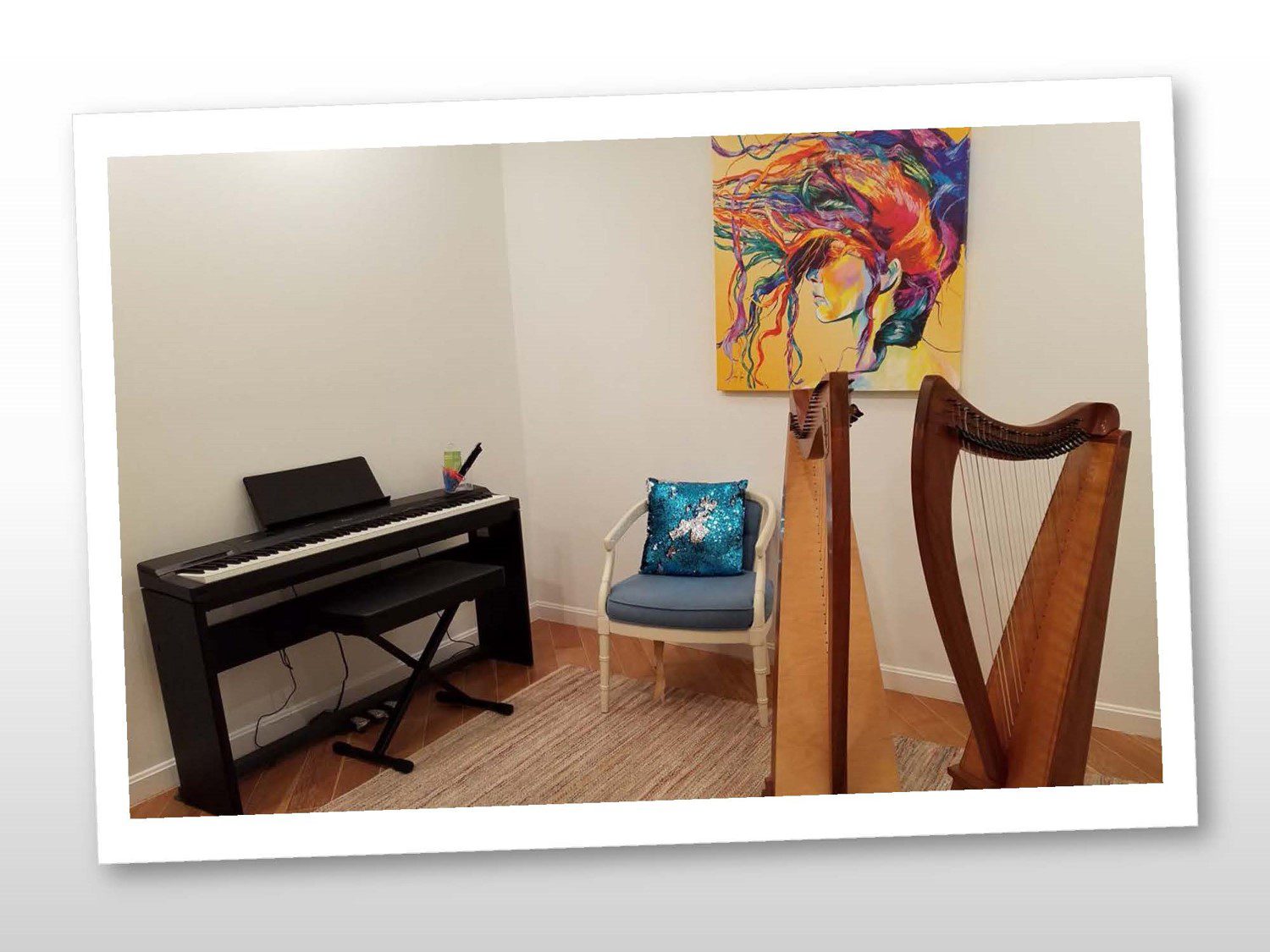
    I’ve been kitting out the new space little by little. First it was carting the harps from Virginia (or borrowing…or both) and working from a delightful electronic keyboard. But time has been passing and I had gotten a piano specifically for the studio space (all 88 keys and everything!) as well as the keyboard. Having both really opens up some possibilities – so we’ll be able to do some interesting stuff as we progress.

    Southern Maryland harp harpist lessons LeonardtownBut this weekend I got the icing for the cake – a new harp (ok, new to me – but that’s excellent because someone else has done all the hard work of breaking it in!). So now the studio harps are a Dusty Strings Crescendo 32 in Walnut and a Dusty Strings FH26, also Walnut. It sounds so smooth and mellow when we’re playing!

    Of course, the unexplored space is between the harps and the pianos – with the electronics going, maybe we’ll do some overdubbing and see what kind of musical mayhem we can make – but that’ll come later, if there’s interest.

    The studio is in Leonardtown, with its great small-town vibe and eclectic shops – and we’re so near the river we can look right out the window if we need inspiration! I’m delighted to have been invited to use this space at Coaching for the Voyage – what a great group of people to get to spend “work” days with! We are always looking for interesting potential collaboration spaces and I know something creative will come out of this – there’s a purpose for every opportunity! And being in Leonardtown – a recognized Arts and Entertainment District – there will be plenty of fun to share both at First Fridays soon to come and other events we haven’t even thought of!

    Until then, lesson times are available and I’d love to work with you. I’m also pleased to be offering coaching as well. Coaching is for those who are relatively proficient at the instrument and don’t need or want regular lessons, but on occasion would like to “tune up” technique. I’m also offering consulting for those who are looking to stretch and flex their repertoire and would like feedback on presentation, composition or arranging. If you’re looking for a teacher in Southern Maryland leave me a comment and let me know – and I’ll look forward to meeting you!

  • How to select a teacher

    There are teachers all over the world so selecting one can be a challenge.

    Some are out of reach (they keep a very small studio or you’ve decided you wouldn’t be acceptable as a student).  Some aren’t a good fit (they don’t teach what you want to learn).  Some are just too far away.

    So how do you select the best teacher for you?  Look for these things:

    • Approach – does their approach work with your way of learning?
    • Level – do they teach at a good level for you? A little stretch is good but no support or a big stretch may not work for you.
    • Time – be honest, do you have time for the lesson, the commute, and the expected practice?
    • Cost – again, be honest.  This is a recurring cost, so plan for it.
    • Content – do they teach what you want to learn?  If you are set on playing something specific (Folk? Orchestral? South American?) say so up front and work with someone who can help you get there.
    • Personality – again, be honest.  You have to enjoy the teacher enough to spend the time.  Don’t work with someone you don’t like.  This is a biggie.  Don’t take it personally – they won’t!  If it’s not a good fit, ask for suggestions for a better fit!

    Teachers teach because they genuinely enjoy seeing their students develop, grow and eventually outgrow them – take them up on it!


  • What about after the lesson?

    Whew! That’s over!

    Hopefully you leave any lesson with your brain full. That’s why the notebook and recorder are so helpful – they make overflow space!

    But what you do after the lesson is also important, before all that good content falls out of your head. Of course, you know you plan to practice and that will help, but what else could you do?  Here are some additional ideas:

    • Think! Away from your harp, really think about what you learned. What has already escaped you? Sometimes you’re not ready for what you learn – don’t worry, it will fall into place when you are! What puzzled you? Make a list and try to fill the gaps.
    • Review your notes. That will fill a number of gaps.
    • Review your recording. That will fill additional gaps.
    • Practice. No really, preferably as soon as possible! Really work what you learned into your head and your hands.
    • Start a new want list. Whether a regular lesson or the occasional workshop, get a leg up and start capturing what you’d like to learn next. Of course this is always in flux, but it helps to keep it up to date.

    The lesson lasts longer than the hour – it will last as long as you work it in your head!

  • What do you bring to the lesson?

    If you have already identified what you want to learn in your lesson, you are ready to prepare for the event. What will you need to bring to make the most of your lesson time?

    Of course you will bring you – all ready to go, on time and tuned! But the following things will also help:

    • Notebook. Plan to take notes to help capture the gems you came for. You might think you’ll remember it all, but you won’t! You’re likely going to get full answers to your questions (your wants) and it will likely be a lot of information!
    • Recording device. Especially if you want me to be taught a tune. You won’t be able to play it until you have it in your head – which is best accomplished by listening to it. By the way, this doesn’t replace the notebook!
    • Music you are currently working. Even if you have it memorized, bring it so everyone can read it! Just bring it!
    • Your wants list. I swear there is a switch in the bench which evacuates your memory. Being able to state what you’re hoping to leave with will help you both focus on the most important things in the time you have.
    • Journal. Another memory aid, the place you have been collecting your thoughts – and an aid to sharing your progress (this can be your notebook if you’re already keeping a journal).
    • Your full attention. Enough said.
    • A confidence builder. I get it – there’s a lot of stress at a lesson, especially if you don’t have regular lessons. Anything to help you have a good lesson (maybe a “no fail” piece) is a good idea and will help you settle in.

    Being ready will help you have a great lesson and learn a lot. Be ready!

  • What do you want?

    I enjoy teaching lessons. I learn so much each time and I get to help someone learn – it’s a win-win! But sometimes it can be challenging. Teaching regular and recurring lessons to the students in my studio is fun and the progress (and pitfalls) are relatively easy to find.

    But when I’m teaching one off lessons, figuring out what I can best offer can be difficult. That’s when my fervent hope is that the student will be able to tell me what they’d like to get from me. And few things are more frustrating than the answer, “I don’t know” or “Whatever you want”!

    You are paying good money for the lesson, so it’s worth taking a few moments to figure out why you are there! Don’t know where to start? Here are a few ideas:

    • Consult your practice journal – what continuously crops up? Maybe that is something to work on?
    • Record yourself – review the recording and find what isn’t working for you (bring the recording if you think it will help).
    • Review your competition comments – judges are great at spotting things you could work on.
    • Are there things you never learned that you’d like to work on (Harmonics? Arpeggios? Key signatures?)?
    • Is there a specific tune you’ve heard me play that you’d like to learn (please don’t ask me to teach you a tune you haven’t heard me play – what if i don’t know it either?)?

    Knowing what you want to get from the lesson before you go in will help both you and the teacher get as much as possible from the time you have. Even a vague idea will make your lesson better – and get you farther along your journey.

  • Back to School

    It’s back to school time so it’s time to think about learning! This month we’ll focus on lessons. Whether you take regular lessons or catch as catch can, this is for you!

    Do you take lessons? Sometimes the question is stated, “do you still take lessons?” Beyond the philosophical discussion of whether every day is a lesson, it’s a good question. You don’t have to have a regular weekly lesson, but I hope your answer is yes!

    If your answer is no, you’re probably wondering what could possibly be gained. After all, you already know how to play. You’re a self-starter who finds and learns music on your own. You play well enough. Why would you need to take a lesson? You certainly don’t need regular lessons…do you?  Maybe you do – here are six good reasons to take a lesson (or a series of lessons).

    • To get a fresh perspective on your music
    • To spot and fix those bad habits that crop up on all of us
    • To learn something you didn’t know you needed to learn
    • To get your spark back
    • To refocus or refine your attitude
    • To avoid complacency

    We all want to continue to grow and get better and a lesson can be a quick way to get there. There are many ways to schedule lessons – at workshops, at conferences, or with individual teachers.  And typically, teacher enjoy sharing so it’s a win-win for all!

    I’m sure there are other, additional good reasons to take a lesson – let me know yours!

  • I’m at OSAS!!

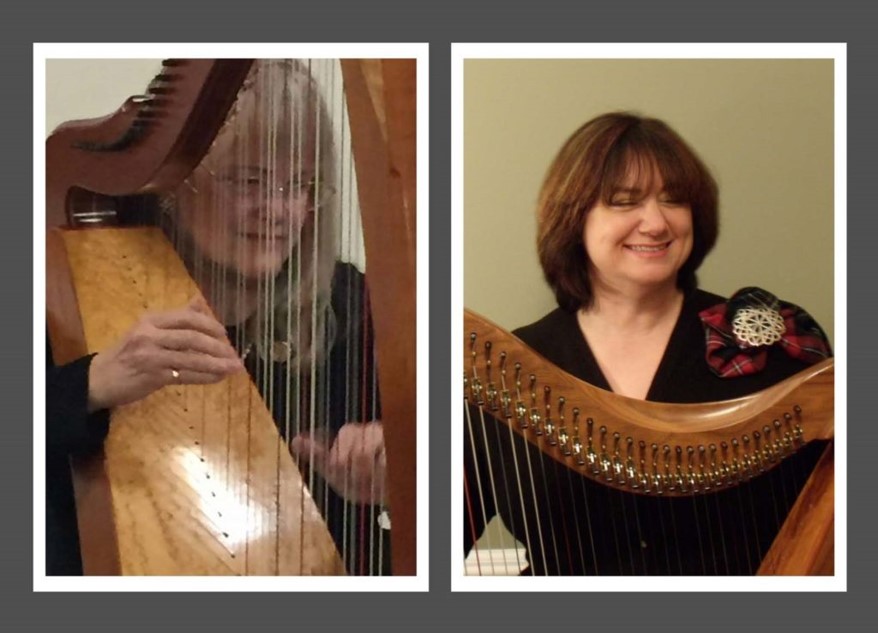
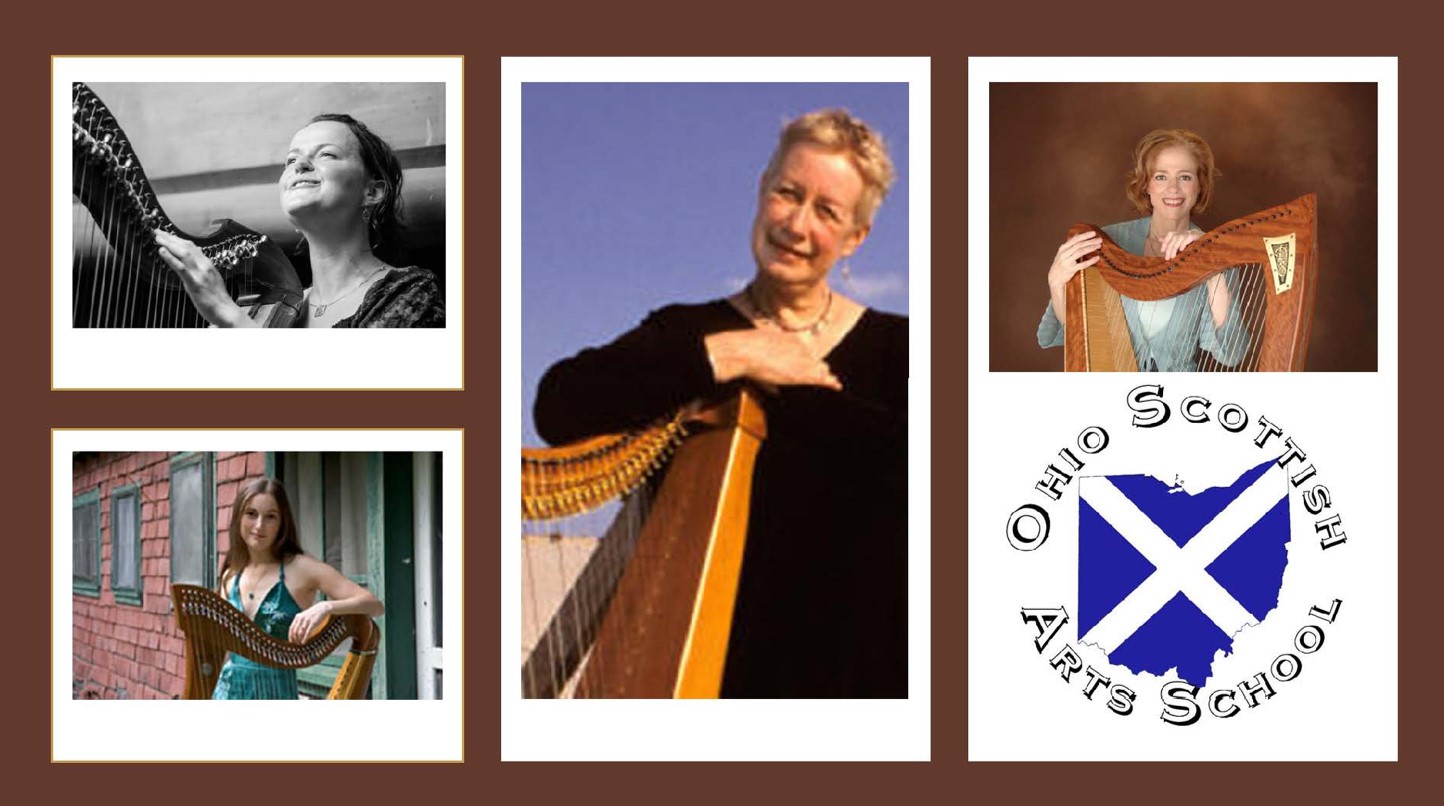
    I’m at Ohio Scottish Arts School this week – so excited and having a great time!  We have four fantastic teachers in Sue Richards, Therese Honey, Dominique Dodge and Gillian Fleetwood.

    We have all learned so much but my head is getting full! More later – gotta go play!

    all photos from websites of the instructors, follow the links above to learn more.

  • It wouldn’t be summer without OSAS!

    The summer really gets started with the Ohio Scottish Arts School or OSAS, presented by the Scottish American Cultural Society of Ohio at Oberlin College in Oberlin, OH. Each summer, for one week, the residents of this small college town get the joy of nearly continuous harp music (as well as pipe, fiddle, and dance music with drumming too!).

    This year marks the 39th OSAS and it will be held June 24-30, 2017.  Really enhance the experience and kick off with participation in the Ohio Scottish Games the 23rd in Wellington, OH.

    Coming to OSAS can be nearly a pilgrimage with some participants returning annually! The days are filled with learning tunes from stellar instructors in the aural tradition, lectures from those same instructors on other related and fascinating topics, and a little processing time to relax or practice. It’s harpharpharp! The evenings are filled with fun with the others jamming and sharing tunes we’ve learned, enjoying the evening air, snacks, and each evening also has a special event – the Instructor Concert, the Variety Show, every night, something wonderfully different and all OSAS.

    If you’ve been to OSAS before, you’re calculating how you’re going to get there this summer. If you’ve never been to OSAS before – you cannot conceive how much you are going to learn, how much fun you’re going to have, how much you are going to bore your non-OSAS friends with stories when you get home – for months! You will laugh, you will work hard, you will have a great time, and you’ll start counting down to your next OSAS experience the day you get home.

    For all the details go to http://ohioscottishartsschool.com/

    • Photos shamelessly stolen off the OSAS website – I’m always having too much fun to stop and take pictures!