Category: Goal Setting

  • You might have seen that there are only 90 days remaining in the year (fewer by the time you read this!).  Have you made significant progress toward your harp goals for the year? Do you remember what they were? Did you write them down? Did you make a plan?

    Fear not – all is not lost – there are, after all, nearly 90 days remaining to make some progress.  So you can end the year with a strong (and deserved) feeling of accomplishment!  And if you are no longer aligned with the goals you set (or if you never got around to setting goals), here are seven things you can still finish this year to end on a high note of accomplishment!

    resolutions-90-days-left

    • Now is not the time to be wishy-washy – identify specifically what you want to work on (e.g., “I want to play Glenlivet at 200bpm” rather than, “I want to play faster”).You can file your paper music – Alphabetically? Chronologically? By type? Up to you, just do file in a way you can find it!
    • Make your 3 x 5 card index of tunes so you can keep more of your repertoire in your fingers (see this previous post).
    • Identify “little things” that need to be fixed in tunes you are already playing – and dedicate the remaining year to fixing them (you know, smooth out that fingering that always makes you miss in the fast tune; actually do the exercises and etudes that will allow you do perform a technical element accurately; commit to memory that chord progression for that air that you love but always stumble in).
    • Identify appropriate, strong, measurable goals for next year – and write them down! (and there is nothing magic about 1 January – you can start now)
    • Commit to actually practice every day for the rest of the year.
    • Write down what you do each day so you can see your progress.

    Just keep focused on what you’d like to accomplish and make a plan to spend the end of the year moving toward that!

  • What are you afraid of?

    It’s nearly spring which means that it will very soon be competition season! Competitions are a great way to push yourself to learn, to grow, to be a little bit daring, to find out something about yourself.

    I know a lot of people (especially adults) are very quick to say that competition is not for them. And that is true for some people. But for most people, it really is a great opportunity that shouldn’t be missed.

    Picture1

    Really – where else will you have such a good chance to make great strides in your playing? What holds you back? There are plenty of reasons – some of them good. Many people are afraid of the potential pain of stretching. Some have a running list of questions – What will the other harp players think? What if I don’t play perfectly? How will I walk away without dying of embarrassment?

    But competitions are a great way to collect the answers to these questions! What will others think? Well the ones you’re competing against are typically focused on what they will play (or asking the same questions of themselves) to worry about what you’re thinking (and it’s likely that the people who aren’t playing are wondering “what if”  and how great you’re doing). What if you DO play perfectly?!? Did you ever think of that? And typically you cannot be too embarrassed to walk off the stage – and it’s hard to be embarrassed when all those people are applauding to show their appreciation and enjoyment of your performance!

    It’s not about winning – in fact you learn so much more when you don’t take first place. You learn more about yourself, you meet new people, you get great feedback and specific actions to make yourself better, you become better, and you know it. So, I would strongly encourage you to push yourself, just a little, to get out there, to enter a competition, and enjoy answering your own questions!

  • Well, it’s one thing to say it…

    I’m sure that you’ve already at least thought of the goals you’d like to work on throughout the year. And that’s all well and good.  If you don’t give your goals some thought, you won’t be able to identify where to focus your efforts.  And of course, not thinking about your goals doesn’t mean you won’t have any – it just means you won’t know when you get there.

    You already know that you will make small steps toward your goal each day. But watching for achievement can sometimes feel like watching your nails grow – you know it’s happening, but you can’t actually see it.  Many of your harp goals will be like that – you make progress but you can’t see it as it’s happening. If you capture that progress, you will be able to see it better – it will be in a single place and will highlight how far you’ve come.Picture2

    But to really make progress you need to make those thoughts physical. There are a number of ways to capture your progress. You could:

    • write it down in a journal
    • build an inspiration board or mood board
    • scrapbook
    • develop a chart
    • use an app for that
    • made a progressive audio file
    • or some other method that speaks to you

    The point of documentation is not to add to your workload but rather to allow you to see your progress over time. Seeing your progress will help you remain motivated, make corrections, seek feedback from others, and keep moving forward. And you might even have fun doing it!  Enjoy the journey.

  • Follow that Goal!

    This year, I had a couple of good ideas for goals and it was difficult to choose between them.  But I have settled onto a single overarching goal. I finally decided to select the one with the least probability of success. Foolish possibly, but I determined that it was a better fit for me.

    I set this year’s goal to be able to play two hours of fast tunes. Not that you’d ever want to do that – that would be sort of hard to listen to if you were in the audience. But, even so, it was important to me to be able to pull it off if challenged. Of course, no one is likely to make that challenge to me – except me!

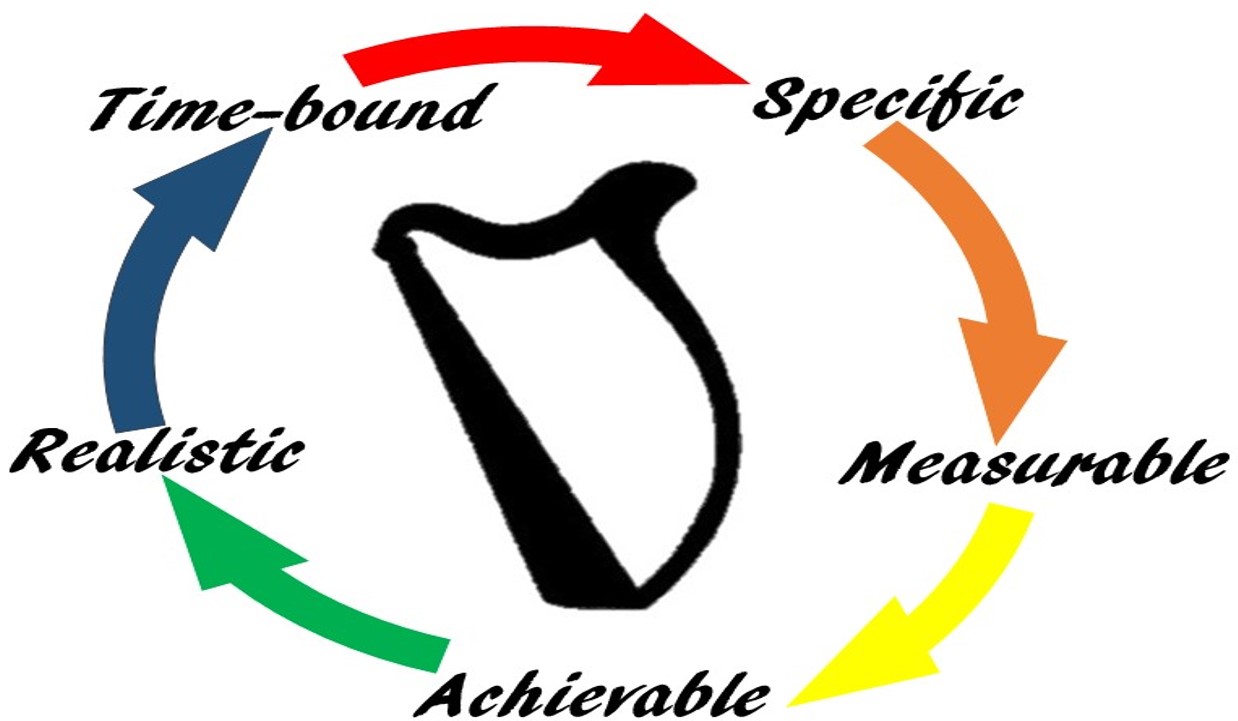
    I think this is a smart goal because I used the “SMART” principle to develop it.  That is, this goal is specific, measurable, achievable, realistic, and timed.  How’s that you say?

    Picture1Specific – I want to focus on fast tunes. Not that I won’t play or learn slow airs or songs, but I want to primarily learn jigs, reels, hornpipes, slipjigs, marches, strathspeys, barndances, and polkas!

    Measurable – I just have to fill two hours and I have a watch!

    Achievable – I calculate that two hours will require about 80 tunes. While that’s a lot, I’m not starting from zero!  I’ll build on the tunes I’ve already learned, so that significantly reduces the number of tunes left to learn!

    Realistic – OK, this is the furthest from “locked in”.  Life gets in the way, and this means that I will have a lot of music to learn – but I’ll do the best I can. And I developed a new strategy to be exposed to tunes I wouldn’t likely find if I was floundering around for tunes so that will propel me forward.

    Timed – This is a leap year, so I get an extra day to work on this!

    What are your goals this year? Are they SMART? Let me know what you are planning to work on this year!

  • It’s a new year!

    Welcome to 2016!  It’s a new year so it’s time for annual goal setting!

    This is a much loved (and hated) annual tradition in which we try to make plans for the year. If we are just playing along because everyone around us is making goals (or resolutions) then we have no intention of meeting those goals.  But if we actually want to make progress, then this is one of the most important parts of the year – when we set out to define what we are going to do all year with respect to our harp playing.

    However, we don’t actually want to start with identifying our goals.

    WHAT??

    Yup, you heard me, we don’t want to start there. We have a much more important place to start – last year.

    What were your goals for last year? How did you do? If you did really well and met your goals, how did you do that? What tools, techniques or strategies did you employ that worked for you?

    Didn’t get where you had originally thought you’d like to? Why not? What happened? What didn’t work? Why didn’t it work for you?

    Picture1

    There are some common reasons goals don’t get met – did any of these apply to you:

    • You didn’t really define a goal (for instance, was your goal something like: “I want to play better”?)
    • You bit off too much goal for the time frame (for instance, are you a first year harper with the goal, “I’d like to play Carolan’s Concerto at tempo by the end of the year”?)
    • You didn’t keep the rest of your life in mind (for instance, was your goal “I will practice every day from 6 – 7” without recalling that that is dinner/homework/family reconnect time so you were never going to get to practice then?)
    • You didn’t write your goals down and by March you couldn’t remember what you had thought was so important in the first place (for instance, was your goal “I will practice scales every day for 30 minutes” but by April it had become “I’ll be glad to sit at my harp for 5 minutes any day this week”?)

    There’s a lot to be learned from last year, so review 2015 and glean the nuggets that will help you develop better goals for 2016 and we’ll work on whipping those goals into shape later this month!

  • My tune a month goal

    Earlier this year I shared with you my goal to learn one new tune a month. I didn’t do as well as I had planned, for a variety of reasons. To be honest, I did better than it would seem but, because I didn’t keep good enough records, there are tunes not listed here that were in the challenge but I don’t remember what I didn’t know before! I did learn a lot though:

    Picture2

    1. I learned that I have to write everything down! My new plan is to have a single planner/calendar/journal so I always have all the info I need at hand rather than a collection of tools which actually created more confusion.
    2. I did better some months than others….and that’s ok.
    3. I’m externally motivated – although I love to learn new tunes, I mostly get them into my head for specific events or activities…. I don’t just learn to learn….and that’s ok.
    4. Some of the tunes I learned:
    • Fair Maid of Barra
    • Caol Muile
    • Alan Friendly (comp. Corinna Hewat (to be fair, that was rocking along but I got sidetracked and it’s not strictly there yet, but I’ll get back to it because I love it!))
    • Don Oiche m’Bethel
    • The Wizard
    • The March of King of Laois (which I’m embarrassed to say I hadn’t learned earlier)
    • Atholl Highlanders (another I never really got into my hands)
    • Josephine’s Waltz ((Comp R. Tallroth) a tune all my friends play that I needed to catch up on)
    • Amazing Grace (I’m slightly embarrassed that I didn’t know this cold – but that’s been fixed)
    • Auld Lang Syne (another that I should have known but somehow had managed to not learn previously!)
    • I reprised and worked on a few tunes including Malcolm Ferguson, Banks of the Lossie, McIntosh’s Lament, and (given the date) a number of Christmas tunes I hadn’t played a lot before

    I need to set myself a challenge like this more often because it helped me focus and learn!

    Of course, it’s nearly a new year so I can get back down to the business of the plan for 2016! I have a good idea when I could start.

    How did you do on your goals?

  • Planning for everything

    Recently, a harp friend died. This was a tragedy as she was a lovely person and a very good harp player. I had known her almost all of my harp life.

    Not long after that, her family wanted to move on and part of that was to assure that her harps went to good homes. And so I was fortunate to be able to help the family in finding each harp a new loving home. But it got me to thinking.

    Picture1It was very difficult for the family – it’s a difficult time as it is, but having to figure out how to move these harps along was just another burden for them. Because we love our harps and our harp friends/family so much, we may forget that to our “real” family isn’t as plugged in to our harp world. They don’t know how we communicate, how to “shift” a harp, where to go for help, how to move on.

    In addition, while our families might try to meet all our wishes, we may not have shared what we would like to happen to our harps (and their assorted detritus!). You may want to be sure that your harps go to a chosen friend or you might want them embedded in a local organization’s harp rental program, or you might want your local (or favorite) school to receive your bounty. But if you don’t tell anyone, no one will know. Be specific – remember that it is likely a loving, non-harper will have to attempt to do what you want, so guidance from you would be a big help!

    Therefore it is important to document and share your harp wishes with your family. Think about (and plan for) where you’d like all your harps to find a new place when you will no longer need it. If you will donate to an organization – be sure that the organization knows it will eventually receive your bounty. Be as lovely and generous as you always have been and others will appreciate your kindness.

  • Holidays are coming up!

    Those people who are planners will note that it’s about time to start getting ready for the Holiday season. Since the retailers have decided that Labor Day is when Christmas stuff comes out, we should probably take a hint. The holiday season is a time that you can expect to be asked to play. If people know you play the harp, you’re going to be asked (If you haven’t told your immediate family that you’ve taken up the harp, you need to come clean!).

    Whether you will play for your dog, your family, or parties and other gigs, you need a plan that will allow you to get through the season of holidays with minimal stress – and still leave time for your shopping.

    Here are a six things you can do to be prepared:

    Picture1

    1. Make a list – what tunes are you going to play? What have you played in previous years (these will come back quickly)? What did you have requests for last year that you need to learn?
    2. Get out your calendar 1 – when are you available? When do you have other obligations?
    3. Decorate – what will you wear for your gigs (even if its your dog, think of it as a gig)? Can you actually play in that outfit? If you’re pulling out your annual holiday outfit, a year is plenty of time to shed, find or redistribute weight – does it still work for you? .
    4. Get out your calendar 2 – when are you going to practice? When will you be too busy to fit in time? Where does that fall relative to your obligations to play?
    5. Get it together – do you have any music or notes you need pulled together? Are they attractive or do you still have a collection of stickies and scraps of paper?
    6. Breathe – do you have enough time to do all the other things you might do for the holidays (such as baking, visiting friends, wrapping gifts, etc.)?

    Get started now so you can have a relaxed enjoyable holiday season – you’ll be glad you did!

  • Double Digits Day

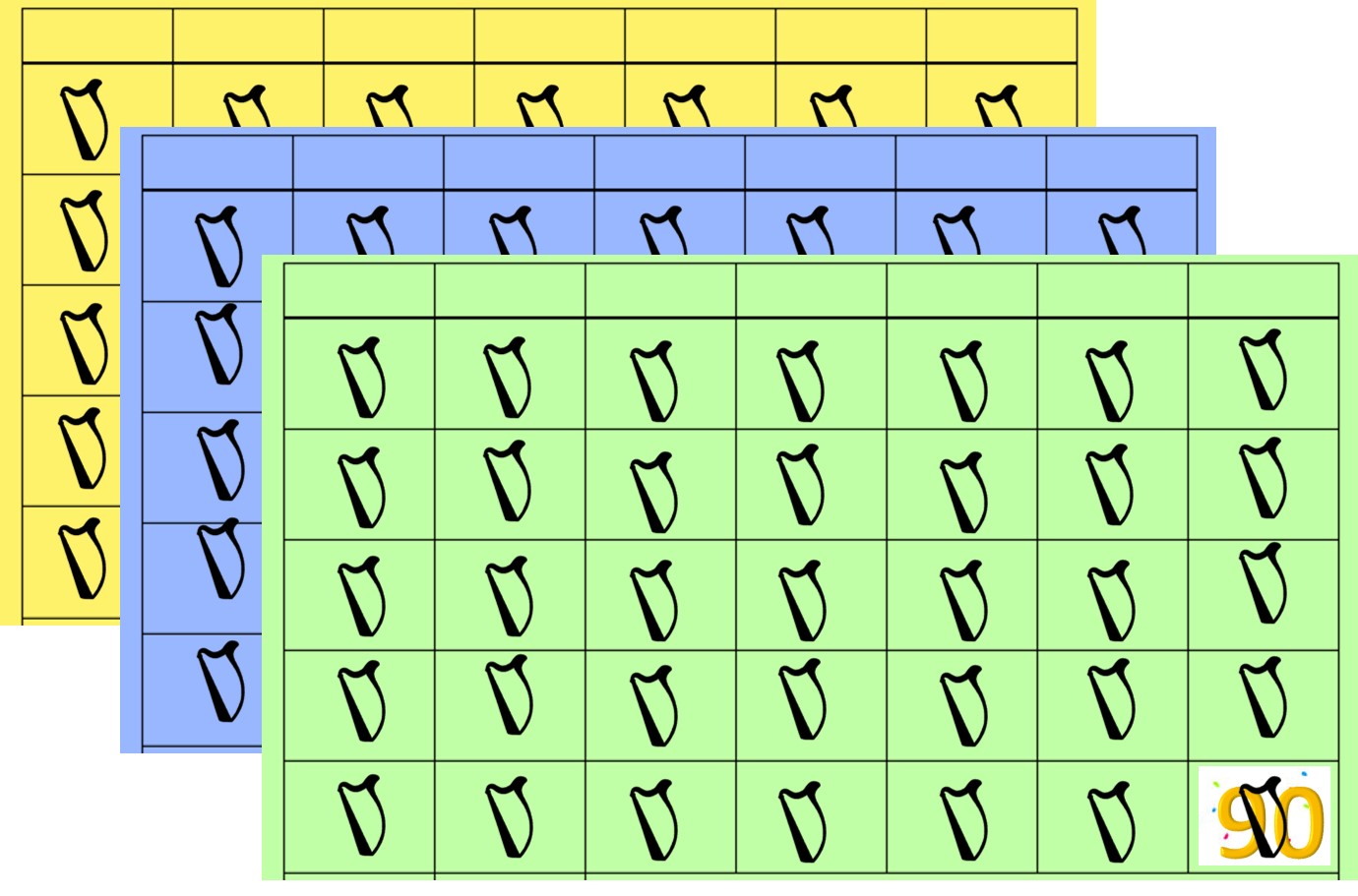
    Today is double digits day – there are only 99 days remaining in 2015 – so we are losing that feeling like the year will never end and entering into the part where the year seems to be flying by faster than we can see! So the question is – have you done all the harp things you set out to do this year?

    If you have, good on you! But more likely than not, there might be a couple of things as yet unfinished. The good news is you have plenty of time to get going on them and likely finish before the end of the year!

    Picture1Apparently most people don’t meet their goals (a desired outcome) because they didn’t have enough time. Of course, we all get the same 24 hours each day – it’s how we use them that we need to look at. It is easy to get overwhelmed by the sheer number of things we think we will accomplish in a day (with work, school, chores, tasks and other stuff) – and in that overwhelm we don’t always get to our harps.

    Which is a shame since the simple act of playing would probably significantly reduce that feeling of unending overwhelm.

    There’s no challenge implied here. But imagine what kind of progress you could make if you mindfully moved yourself forward, just a little bit, every one of the remaining days in 2015. It’s a great opportunity to start journaling your practice or actually practicing each day (even if only for 30 minutes!). It’s a chance to do something for yourself, that isn’t bad for you and just might do you some good! At a minimum, it will help you count down the days (and will help highlight how close the holidays are – yikes!).

    There’s nothing magic about having 99 days remaining in the year – it’s just a milestone, a time to stop and reflect, to determine if we’re doing the things we want to be doing with our time. Are you in?

  • Reading Challenge wrap up

    Did you set a reading goal for yourself? Did you make good progress to that goal? The original idea was to set a short term goal to read at least one tune each day.

    I didn’t do as well as I would have liked. I didn’t get to read every day. And I fell well short of my goal. That happened for a number of reasons – the sort of reasons that often trip us upPicture1

    • I didn’t have a real plan for what I was going to read
    • I didn’t make sure I had the “bandwidth” to insert reading into my daily practice – some days I don’t have a lot of time to practice and I chose to spend the time I had on work that has a shorter horizon.
    • I didn’t prioritize reading.

    Now, to be fair, part of the reason I didn’t has as much time included that I worked to prepare to teach a workshop (ironically – on sight reading!). I also need to prepare for some upcoming events that required I spend time writing which meant I didn’t have the time to read.

    And, of course, reading isn’t really a contest so I could slag it off – I only needed to read some ensemble arrangements. But I have to admit, I’m a tad disappointed. Not only because I didn’t make my goal but also because I set the goal but then didn’t do enough to make it happen. That’s how it goes when you make a wish rather than a goal.

    How did you do?