Category: Practice

  • I’m having an affair with Seth!

    It started when I was 12. My parents introduced us. Seth and I had a rocky relationship for a long time. I was convinced that he hated me and I never really respected him. I let him stew, alone, for years.

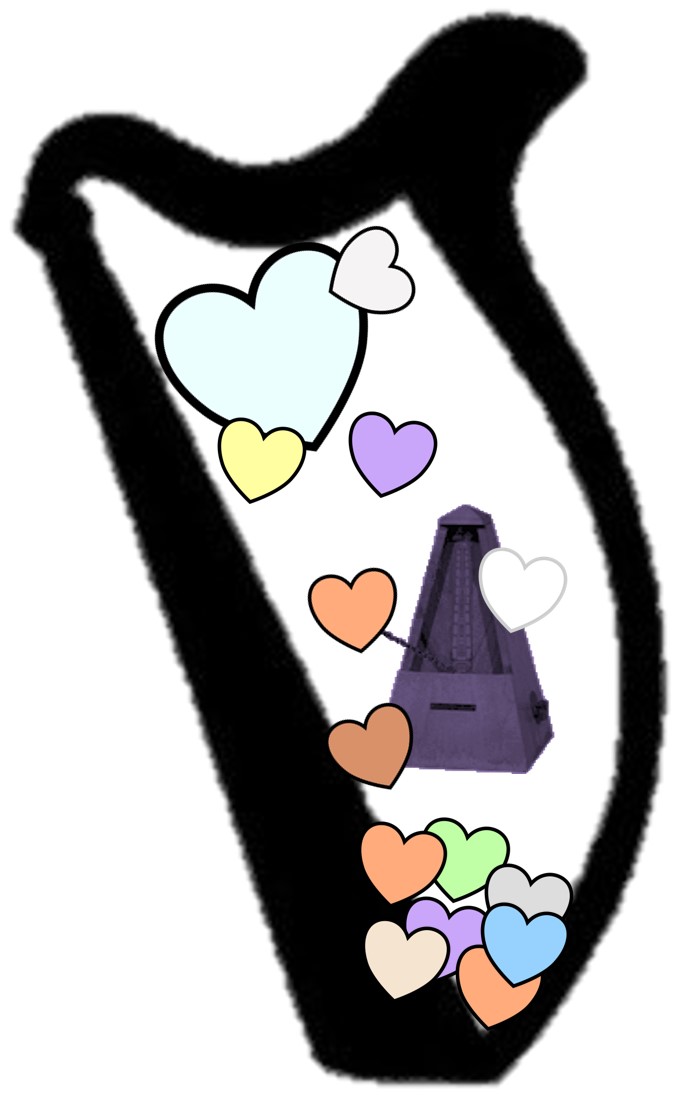
    But recently, I developed a begrudging respect for him.  And lately, that has blossomed into a raging love affair. I have learned to love him – Seth Thomas, my metronome!

    MetronomeI had noticed that as much as I tried to ignore it, and as often as I played it, there was a tune (ok, really a set of tunes) that were just random at best. They gained momentum every time I played, and no amount of toe tapping, counting aloud, or getting dark looks from those around me seemed to help. In addition, I could never play them cleanly – there was always a mistake somewhere. And some of those mistakes were not random. Further, I love the tunes, so I really wanted to clean them up.

    Enter Seth. Now, these are reels mind you. I set Seth on the bench next to me and selected 64…for the and! Yes, that meant the tempo was 32. If you’re one of my students it has now dawned on you that this is not just something I made up to torture you – I actually made it up to torture myself! At that speed I noticed all kinds of things. First the tune totally fell apart, so I had to rebuild the tune so I could remember what came next, not just let it happen. Also, my fingers and hands were tense and not ready for what was coming. Finally, because I had played it below standard so many times, my posture was hunched while I waited for everything to come apart.

    Now, Seth sits by me, stoically, working with me (although sometimes it still feels like its against me!) to help me do the work to make the tune come out of the harp the way I hear it in my head. We’re taking it slow, me and Seth, and building a future together. I’m so glad to have Seth in my studio – it must be love!

  • Do you make your practicing harder than it needs to be?

    I’m not a neat freak. In fact, I’m not very neat at all. I sort of thrive on a little bit of a mess. But I have a very selective mess – I have sheet music piled everywhere, and music books mixed with reading books.

    clutterBut I also have a lot of bright lighting and a wide clear space for my harps, nothing on my benches and typically pencils and pens on the stand shelf. It is my kind of organized – I have what I need where I need it when I reach for it – and when I reach, I don’t knock over piles of stuff!

    How about you? What does your practice space look like? Have you made yourself a space in which to work or is your harp stuck in a corner? Can you sit and play or do you have to move a lot of things (furniture, books, shoes, etc.) to get to it so you can do your work?

    This might seem silly but actually, your workspace is important. You will not practice if you can’t get to the most important tools you need – your harp, your bench, your music! You might think you will move things out of the way and get your harp out each and every time you want to practice.  And perhaps you will, sometimes.  But few people are consistent in digging something out to use it and you are unlikely to be consistent.

    So, if you are not practicing as well, as consistently, or as regularly as you think you should, take a good hard look at the location of your practice space, your harp, and the tools of your work. Make any changes that will reduce the amount of fiddling around you have to do to get to practicing and see if you gain some consistency and improved practice! Don’t put your baby in a corner – and don’t make your practicing harder than it needs to be!

  • The notebook is a tool, not a book bag weight

    If you are taking lessons, you likely have a notebook of some kind at the request of your teacher. Many music teachers ask their students to have a notebook, but many students are not able to use these to best effect. How do you use yours?

    First, you should know that this notebook is not a diabolical plot on the part of your teacher, designed to make you crazy. Nor is it a thinly veiled means of making you buy more books you won’t use.

    Picture1

    I like to structure these notebooks to act as a communication device. The notes are not only a place to give instructions but also to start a conversation. I ask my students to write a note each day that they practice – to indicate what has gone well and what has not gone well.

    I find that the teacher’s bench is much like the doctor’s office stool – simply sitting there results in forgetting everything you meant to say! Writing in the notebook helps you to remember what you meant to bring up at your lesson so that it does not evade you when it’s time to bring it up.

    Think of the notebook as shared with your teacher. But mostly you keep it for yourself. This is where you capture your thoughts about your practice and the music as you work through it – the good, the bad, the indifferent, the incredulous, the awe and the awful! Capture it all – not only to go through the exercise of the capture but also for later review and reflection.

    Really your notebook is a journal. As with any journal, the point is to capture your progress, to find what you notice seems to be bubbling up, and to reinforce the discipline of both practicing and journaling. It will help you get more from your practice. The added benefit is that it will help you get more from your lesson. If you don’t have a notebook now (or if you always seem to “forget” yours at your lesson) get one you like and start using it now – when you try to remember what you did this week, you’ll be glad you did!

  • Don’t check out when you’re practicing

    Do you practice every day? Or nearly every day? If so, you might think you are a really good practicer.  But are you really?

    It is a good start to sit on your bench for practice time, but what do you do once you’re there? To get anything from your practice time you need to be there to work.  What sort of work do you need to do?  Well it isn’t just playing through all your tunes halfheartedly! Here are six things to include as you think about your practice:

    • Picture3Problem solve – unless you have something down perfectly, there is work to be done – the trick is to determine what needs to be done and to suss out the best way to get that work done
    • Define the work – do you partition your practice time to spend time on the aspects of playing that are important? Warming up, technique and exercises, detail on tunes you are learning, development of music you have in work, polishing and tweaking music that is learned are phases to include in your practice times.
    • Check your attitude – if you think practicing is a waste of time, it likely will be…so make sure you set your attitude to get something from the time.
    • Pay attention – be engaged with your practice and expect good performance from yourself.
    • Have a plan – know what you want to do with your practice session.
    • Work the plan – don’t just make a plan, use the plan to achieve your goals.

    Don’t practice longer than you are able.  You need to build the strength and stamina to practice for longer practice sessions – and if you don’t work your way up to it, you will be too fatigued to get anything from a longer practice session.

    Be sure to stay engaged with your practice – don’t check out when you’re on your bench!

  • Why are you practicing?

    Sometimes, especially if our playing is primarily for our own amusement or edification, we tell ourselves that we don’t have to work as hard or accomplish as much when we practice as others do.  Nothing could be farther from the truth!

    It is essential, regardless of our level of play, that we become skilled and build effective technique.  We need to have the technical skills to elicit music from our instruments and to breathe life into that music.  Pasion without technique will give you inconstant playing.  Of course, technique without passion gives you lifeless noise (but that can be left for a different post).  And our selected audiences, be they full concert halls or the curtains and the cat, deserve the best we can deliver.

    Picture2You might have heard the chestnut that only perfect practice makes perfect – and it is true! Don’t settle for nearly good enough. Make each practice session worth your time!

    You can use tools (such as the free printable log) to guide your practice so that you get more from the time.  Include repetition in practicing.  Repeat not only the individual items but also the structure so practice is also practiced.  Practicing your practicing, just like practicing a tune or practicing tuning, will make you better and stronger in less time at each practice session.   Are you practicing your practicing?

  • Printing Clarity

    Sometimes it’s the easy stuff that is so hard to do. For instance, we know that we need to practice, but we struggle to make it onto the bench regularly.

    We know that we will have a better feel for our progress if we capture the interim steps and yet, we don’t write down the details that would help us remember what was going on or understanding what has happened while we were working.

    Picture1We have a lot of reasons that we don’t mark our progress. Many of us just don’t have a good way to capture those thoughts and notes. So I developed a free printable log that you can use to track your progress. There are places to note what you’ve done.  There is also room to write down your impressions of what is going well and what you need to continue to work on.

    There is no “right” way to use this log – the point is to use it for your own growth. You can also use it during your lesson to assure you remember what you wanted to work on while you meet with your teacher or coach. It includes those things that I have found are good prompts for staying focused.

    Click on the link to download your free copy of the Practice Log printable.  Give it a try and let me know if printing this brings you clarity – if it works for you!

  • It’s what you put in

    One of the most disheartening things is when you work really hard on something and it still doesn’t come. It’s enough to make you crazy – especially if you convince yourself that it should be easy. We have all sorts of things we tell ourselves – but are we identifying the right things to improve?

    I found a quote from Eric Lindros (Hockey player for those of you who just said, “Who?!” – remember how I like to cast a wide net!), ”It’s not necessarily the amount of time you spend at practice that counts; it’s what you put into the practice.”

    How true!

    Picture2So, what do you put into your practice? Here are some things you could do to help you practice more effectively:

    1. Know what you’re doing! What is your plan? What do you need to work on? Reading? Rhythm? Fingering? Know before you sit down.
    1. Make a plan. Don’t just sit on your bench and hope for inspiration – once you know what you need to work on, plan out how you’ll work on it in this practice (of course a longer term plan will also be helpful for staying on track).
    1. Work at your own speed. Want to play that new reel at wicked speed? Do you really think you’ll be able to do that while you’re still struggling to remember what comes next? Work at a pace that allows you to think, to work through the intricacies, the hard stuff! The speed can come later.
    1. Include warm ups and exercises – these are not just drudgery. Exercises and warm ups allow you be ready to work and to develop skills and techniques that allow you to develop while working.
    1. Recognize the difference between working through and playing through. Working through is the tough work of breaking the music down so you can build it back up again.
    1. There is no one right way to practice. But you can learn a lot from teachers and other more experienced harpers – so it might be a good idea to listen!

    Put the right stuff into your practice and make it count!

  • It’s like brushing your teeth

    Practicing is a lot like brushing your teeth. It isn’t fun, but it is good for you. And it’s important to do it every day! So here are some reasons that practicing everyday is important:

    • Practicing gives you an opportunity to develop a better relationship with your harp and with your music. For at least 200 years (from the earliest credit I found, although lots of people are credited with saying it) musicians have been quoted as saying, “Miss one day of practice, I notice; miss two, the critics notice; miss three, the audience notices.” Each day of practice helps strengthen your relationship with your tools – the harp and the tunes.
    • Just like you need the repetition of brushing your teeth every day, your practice needs repetition. The repetition is a good foundation for a structured practice that allows you to focus on the work you’re doing while you’re practicing.

    Picture2

    • When you brush your teeth each day, you tend to do it the same way every time. This structure is good for your practice too. Doing your practice basically the same way each time helps to assure you do a warm up, some exercises to build technique, music you are learning, play something for fun each day so you don’t skip something or spend too much time but rather do a little of each activity of your practice each day.
    • That structure also helps you transition from the hustle-bustle of the rest of your day and settle into the good fit of your practice structure.
    • And just like brushing your teeth, your goal is to do a good job, not to be perfect. In each practice you do work and develop – you don’t get to perfect…and that’s ok. It gives you a place to start the next day.
    • Practicing every day, like brushing your teeth each day, gives you a consistency that you can build on, day after day.

    So, each day, before you brush your teeth, sit to your practice – it’s good for you, every day.

  • Focus and listing

    We have been very fortunate all month to have Sue Richards generating guest blog content. As we approach the end of February, we have some closing thoughts from her. She has shared some excellent thoughts about practicing and preparing tunes for performance. We have learned the importance of patience and of choreographing our fingering. The last bit she has to share with us is the importance of thinking! She tells us,

    “Brain focus. The hardest thing to teach to harpers is to think ahead to where you need to be in the next measure. You don’t need to watch your hands play because you are playing by feel, right? Think ahead! Don’t think about the audience unless you are playing something slow and have the time. In reels, you have to think only about the tune. If there are jumps in the tune, spot them with your eyes until your hand gets there.”

    Picture2Your brain is working for you, doing the heavy lifting while you shine! But you have to support it. Not only while you’re performing as Sue said above, but also each day as you practice and prepare. She has a very do-able method to help her practicing,

    “So I keep a book with every page listing the ten or so tunes I am working on for that month. They come and go, and sometimes come back. I think I’ll get some star stickers for the ones that graduate. It feels like a big accomplishment that only I know about, and am very proud of. It is good.”

    Now that you know some of the ways that a Harp Hero makes it looks so easy – you can add some to your own toolkit. Give your brain and your fingers a boost in practice and on stage – and you don’t even have to wait for March!

  • You can Dance –

    In last week’s post, Sue Richard’s mentioned “choreography” of the fingering for a tune. This week, Sue expands on the importance of practice and getting your fingering right –

    Picture2

    “Part of smart practicing that I think people don’t pay attention to is the way the tune feels, phrase by phrase. Memorize the way it feels when you have a crossover or an odd fingering. Memorize the feel of the occasional chords and relish them. If it is an Irish tune where you should play variations, practice them. Don’t just expect them to pop up. And don’t play the tune exactly the same way every time. Have at least one variation of a measure or two on hand, all practiced up. And most importantly, relaxing is part of the choreography. Know where you need to loosen up, and where you need to play hard to make a phrase exciting and interesting.

    “Choreograph your fingering! Try difficult phrases many ways, using all the available alternatives. Crossovers, slides, taking a note or two in your LH, skipping a note or substituting a note are all good. Pay attention to the heavy and light notes, and figure out where you might want cuts. Then move into the stage where you play it the same way every time, for 500 times. (That’s what takes seven years.) Also, understand that many things like triad patterns and runs of 5-6 notes and walk-down LH are common to many tunes, and will transfer.”

    Are you ready to learn your choreography and dance on your strings?