Author: Jen

  • Technical Ecstasy

    I’m sure that your teacher has exhorted you to work on your technique. I have too. And hopefully, you too, urge yourself to work on developing, strengthening, and enhancing your technique.

    I know I have, on many occasions over the last few years (ok, way more than a few). And we all know that technique is central to playing. It is essential to growing and developing as a player. And while you might see a brilliant musician play with less than exemplary technique, those tend to be rarer than not. While you might aspire to play like that person – you could just smarten up your technique – so you don’t have to work so hard to pull it off!

    So, I’m sure we are agreed – Technique is important!

    Technique is important – but you have to watch carefully that you make music!

    Technique is important – but you have to watch carefully that you make music!

    I’m not going to debate that.

    However….

    Technique is not where we make music!

    W – H – A – T?!?!?

    You read that right – and I mean it! Technique is not where you make music. Technique is the hard work you do so that your ability to play becomes effortless. It is a tool – a means to an end.

    I once saw a video of a cellist making an A440*. There he sat, tuner on the floor just below the cello, playing an A over and over – watching the needle on the tuner, working (very hard) to make an A accurately, consistently, repeatedly. [Note: this video also made me so grateful to play the harp where we set and forget (sort of) our tuning. I’m delighted that the pitch part of the intonation is not part of the deal!]

    By the end of the video, it was clear that the work on technique had helped to play better. But it was also clear that it was not music. It was carefully executed sound.

    Because music isn’t just sound (yes, I know you already know that, but it bears repeating). It has been said that the music actually happens in between the notes.

    What?!

    Music is not just the notes. It is not just putting noise into the air. Music includes putting in the silences, the spaces in between. It also includes adding the breathing, the inflections, the dynamics, the pulse, the tempo. It includes all the shading, highlighting, and storytelling you can get in there!

    Of course, you can see that your good technique will make it easier for you to do all those things. Technique is necessary but not sufficient to achieve making music. I’m sure you have all heard some people who play technically accurately but with no music. They achieve Technical Ecstasy (with apologies to Black Sabbath). They try to master the music, but instead the music (typically via the tyranny of the dots) has mastered them. In fact, when you see these performances or hear these recordings, you have no doubt that all the notes have been delivered – but you are left empty – hungry for and bereft of the feelings you get from a lesser (technically) performance delivered with heart.

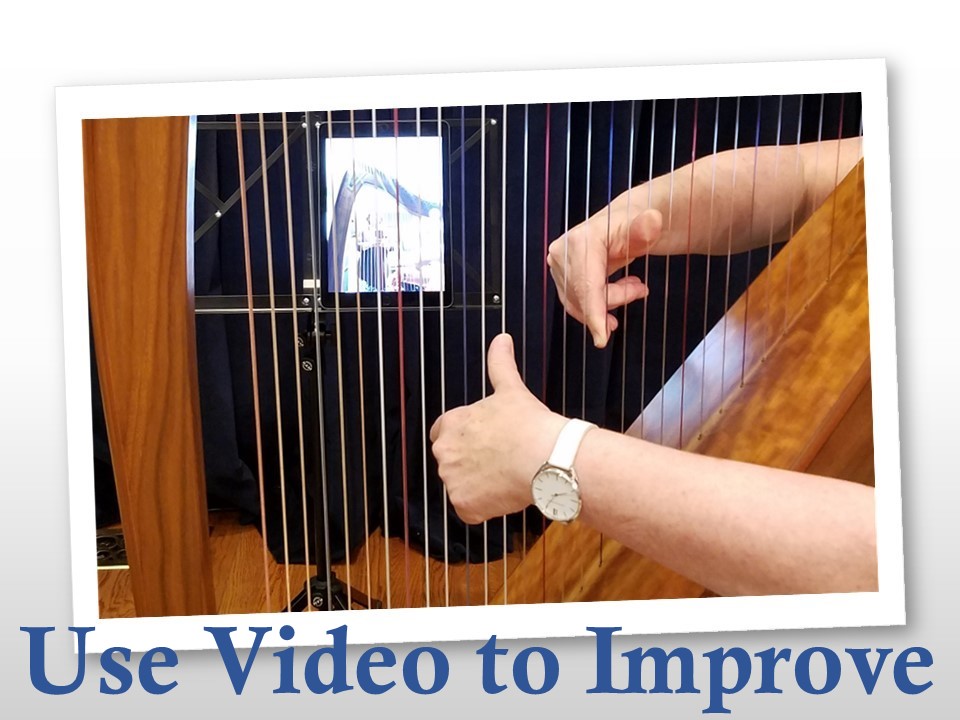
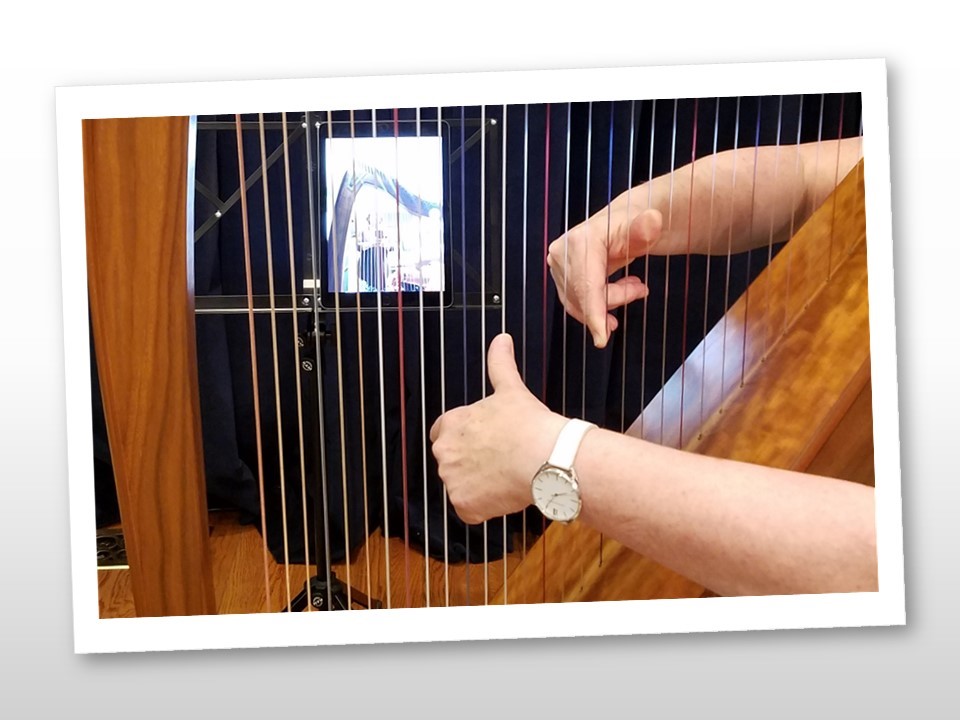
    So, I encourage you to continue to work on technique (of course) but also to devote practice time to breaking out and rendering music – not just notes. This is easiest if you record yourself to reveal what is coming out of you – and working on that too.

    After all, technical ecstasy won’t give you music, but music may just lead to ecstasy, technically!

    * I wish I could remember who that cellist is – I’d give credit if I could!
  • Contributing to the diversity of a minor

    So, now you know that the minor scale is related to the major scale in that it uses the same notes but starts instead on the sixth. And you know, from your playing, that the minor scale is used a great deal. Although in modern western music the minor scale is considered dark, sad, lamenting, etc. earlier in western civilization the scale was considered happy. Things change.

    The minor scale remains a very useful convention. But what you might not know is that one of the things that the minor brings is diversity – there are a number of minor scales.  Yikes! But with a little bit of explanation, you’ll soon understand (and be able to use) the different types of minor scales.

    First, there are different minors! And there are terms that can be confusing. But once you get the lay of the land, you’ll be able to participate in those high-falutin’ music conversations with anyone!

    There are the relative minor, the natural minor, the parallel minor, the harmonic minor, and the melodic minor. First off, it’s not as complicated as it sounds. Sort of like the Future Perfect Continuous Conditional verb tense – it sounds terrifying but you use it all the time (I would have been practicing…). Like last week, now, we’re just learning the formalized rules. So, here we go! We’ll work from C major (again, because with no sharps or flats, it’s easy to see and write). 

    Relative minor. On the harp this is the easy one. Start at the root of the major scale and walk your way to the sixth of the scale. If you’re lazy (and flexible), you’ll just go down three (in our example, from the C go down to the A) and start the scale from there (of course, you can also go up to the a above and start there). Because you’re clever, you’ve already figured out that this is the Aeolian scale that we talked about last week. The intervals in this scale are: W(whole), H (half), W, W, H, W, and W and the notes of the scale are A, B, C, D, E, F, and G. This is also referred to as the Natural minor. 

    Parallel minor. This minor scale is “parallel” because it starts on the same note as major scale in consideration. In our C example, the parallel minor starts on C – so you can already see that something else will have to change – we are going to have to engage some levers. The intervals in this scale are W, H, W, W, H, W, and W, while the notes of the scale are: C, D, E♭, F, G, A♭, and B♭. You’ll see that the key signature has three flats. Let’s think that one through. That means that this is the relative minor of E♭! 

    Harmonic minor. This scale is close to, but different from, the relative (or natural) minor. In this scale you raise the 7th up ½ step. The intervals are W, H,W, W, H, W+H, H (you can see the “big jump” going to the raised 7th).  In our example working from the C major scale, the notes become A, B, C, D, E, F, and G#. This scale allows you develop some delicious harmonies when you use it to build up the chords for the scale. 

    Melodic minor. Ok, there’s no way to dress this one up – it’s a little bit challenging to understand and to remember because going up the scale is different than coming down!  Except when it doesn’t. It is often expressed that for the melodic minor, on the way up the scale the 6th and 7th are raised. But on the way down, scale goes back to “normal” (with the 6th and 7th lowered). In this case the intervals are W, H, W, W, W, W, and H on the way up and W, W, H, W, W, H, and W on the way down. For the A minor scale, the notes would be A, B, C, D, E, F#, G# on the way up and on the way down, the scale is A, G, F, E, D, C, and B (you’ll see that it goes back to the natural minor). Of course, some of the weird comes because sometimes the scale is the same up and down. You might hear that this is a jazz scale – and it is, but it is also quite present in classical music as well. In addition, you might find that sometimes this scale is played the same in both directions. I told you it was a bit challenging.

    Play with these scales. Really give them a working through so that you can find what you like and what you think you can use. The diversity in these versions of the minor scale will give you plenty to work with as you work through tunes and as you develop arrangements – you’ll be delighted with the things you find!

  • In the Mode – Useful theory

    Ok, first, let’s be honest – simply saying “Music Theory” in a room may cause you to come out with no friends. Most people don’t like theory. They don’t understand theory. They probably don’t actually know anything about theory, but they have heard the stories…and those stories are terrifying!

    But really, theory is just a way to have a common language to talk about music. Think of it as the “English Class” of music. It’s where all the rules and conventions are held so that you don’t have to find out the rules every time you use them (or abuse them). And, of course, if you’re a rule-breaker, that’s bad. But if you know the rules and elect to bend them, that’s avant guard!

    So, knowing the rules becomes a first step. You don’t have to learn theory by sweating over a badly written book. In fact, some of the best theory lessons can come right at your harp. But you’ll be faster at learning all the rules if you use a mixed approach of reading about it and sitting at your instrument and exploring.

    Melody is one of the basic elements of music.  Melodies are built from scales. So, it can only help to know what the scales are. This is where some of you will be shuddering – because you know I’m about to talk about…modes (dun-dun-duhhhh).

    The modes have a rich (and depending on who you read, varied) history. Much of this history is interesting. And it doesn’t seem to have much to do with music today. But we do still use the names.

    Modes are not really that mysterious. They really are just variations of a scale. Let’s work in C for this example (everything will be applicable to any scale – but C doesn’t require a lot of #s and bs!).

    Think of what we call the C Major Scale. It consists of: C D E F G A B. The relationships of the interval are either whole steps (W) or half steps (H). Therefore this scale is: W W H W W W H and it is called the Ionian mode.

    BLAHBLAHBLAH, yeah, we know that.  This is a good time to bring your harp in so you can play along at home.  If you have a piano (or keyboard or piano app) this might be easier to visualize.

    So, if you started on the D instead, now the scale is: D E F G A B C and the interval relationships become W H W W W H W. It’s a totally different sound – and it’s called Dorian. It sounds sort of “jazzy”.

    And if you started on the E, now we’re at E F G A B C D. The intervals are H W W W H W W and we call it Phrygian. This scale sounds a little dark.

    Starting on the F we get: F G A B C D E and the intervals are W W W H W W H which gives us the Lydian mode which is pretty peppy.

    If we begin on G the scale becomes: G A B C D E F and W W H W W H W. This is the Mixolydian mode – and for those playing Scottish and Irish traditional music, it probably sounds very familiar – it has the flatted 7th that we’re so used to hearing.

    By starting on the 6th we get: A B C D E F G with intervals W H W W H W W. This may also sound hauntingly familiar – this is what we usually call “minor” – it is the Aeolian mode.

    The last mode is the Locrian – it begins on the 7th: B C D E F G A, and the intervals are: H W W H W W W. This mode is just weird (to us) and you don’t hear many songs in that scale typically because it doesn’t resolve which we don’t really like in western music (of course, other cultures have different scales and many include “unresolving” scales that we might shy away from).

    No one scale is “better” than another, although you might prefer the sound of some over others. And that’s ok – music is a cultural thing so what you’re used to will likely sound better to you than something that is new and different.

    Spend some time on your harp playing with these scales – see what you like. Keep at it and see if what you like changes over time, as you become more familiar with the sounds of the “different” scales. Once you get used to hearing and thinking about these, you might be more inclined to look for them or to use them. Later we’ll talk about the chord progressions that might set these different scales off if you use them for a melody. Keep practicing and the theory will work its way into your brain!

  • Work

    I am spending this week at an engineering conference. No, it is not as boring as it sounds. Yes, there are lots of very cool and interesting people there. The first session I went to was what I think of as a “hero round”. There were a few speakers who have “made it”. That is, they are recognized as being at the top of their respective heaps (in fact, that is why they were invited to come).

    They gave interesting talks that shared glimpses of challenges they have faced, how they continued to grow, what they liked best and least about working their way up. It was fairly inspiring. They were asked questions about glass ceilings, impediments, and pratfalls that might have befallen them.

    Interestingly, their answers were similar and focused.

    They both talked about the importance of doing the work.

    They talked about knowing their stuff.

    About having their fundamentals firmly in hand.

    About spending time to get their ducks in a row – whether they thought they had to prove themselves or if they already had command of the room.

    They also talked about the importance of continually learning.

    They talked about sometimes failing – and how much they learned in those instances.

    All of those things really resonated – because no matter what you do, it matters.

    Whether you are a professional or a hobbyist – it matters.

    When you do the work, when you know your stuff – you are more comfortable when it’s your turn to play.

    When you do the work, you get your fundamentals in hand – and the work becomes easier.

    When you do the work, continued learning is a joy and adds to your baseline. And you learn more quickly and possibly more thoroughly.

    And really – how much work is it? We play a beautiful instrument that (at least to the people I talk to) we really enjoy playing. Even when it’s hard. Even when we don’t have it quite right. Even when we think e-v-e-r-y-o-n-e else is better, more experienced, more competent than we are – we still enjoy playing.

    So, keep playing. Enjoy. Savor learning and growing and experiencing.

    Now, GET BACK TO WORK!

  • OSAS 2018!!

    Having too great a time at Ohio Scottish Arts School 2018 – the 40th Anniversary to spend too much time writing!  Here’s a quick snap of some of the goings on*.  So delighted and privileged to work with such fantastic and talented people.  Pinch me – it’s totally real!

    Snaps of Ohio Scottish Arts School 2018 – 40th Anniversary. Teaching with Sue Richards, Seumas Gagne, and Gillian Fleetwood.

    Start planning for next year!

    *Special thanks to Therese Honey for many of these photos!

  • Harp the Highlands and Islands Trip 2018 Wrap-up

    Well, we have completed another Harp the Highlands and Islands Trip.  We’re all still basking in the glow of the fun times and new friends we developed while we were in Scotland.  And of course, we’re all weathering the shocked feeling of returning to “real life”.

    We did have a great trip – good weather (for the most part), wonderful venues visited, joy and celebration together with new friends and old.  It was a blast!

    Here are a few more photos that help capture the fun we had:

    This is perhaps my favorite bathroom in all of Scotland – come with us next time to see it for yourself! We enjoyed visiting Glenfiddich Distillery – they give a really good tour.
    The sky is always breathtaking and we enjoyed the brief stop at Fort George before heading to Cawdor Castle but Clava Cairns were also a hit!
    We were privileged to have our harp event for the day in the magnificent dining room of Ballindalloch Castle. More sky – because, well, just look at it!
    On the last day there, even the sky looked sad – and we pass the Edinburgh sign, going the other direction…can’t wait ’til the next time!

    Wish you had been able to come with us?  Well, don’t despair – we’re already planning the next trip – watch this space for updates.

  • Harp the Highlands and Islands Trip 2018 Halftime report

    We’re about half the way through our trip – and as always the weather has been good, the sites have been great and our people are fantastic!  We’ve already shared some wonderful tunes as well as some delightful meals!  Here’s a peek:

    Wish you were here!

  • Getting Ready – Harp the Highlands and Islands Trip 2018

    Just arrived in Edinburgh and, as always – it’s lovely!  Great weather, lovely people – what’s not to love?

    Looking forward to everyone getting here.  More pictures next time and on my facebook page.  Maybe you can join us next time?

  • Boot Camp Week 5 – Five Weeks to Better

    Well, you made it – Week Five of Boot Camp! You should be proud of yourself and your hard work. This gives you a foundation to keep building your practice and to refine it to meet your needs. Those needs will likely change as you develop as a harper, but the fundamentals stay the same. So, keep at it and finish strong!

    Stretch – Small Shoulder Rolls are relatively easy, but because we use our shoulders more than we know, you might be tighter in the shoulder than you’d expect.* Begin by sitting (or standing) upright, head up, shoulders down. Place your right fingertips on your right shoulder and your left fingertips on your left shoulder with your arms in front of your chest. Your elbows should be close to your waist. Now, rotate your arms to the outside and “draw circles” with your elbows. Keep your head up. Take your time – go slowly and carefully. If your shoulders are tight, this may be challenging. Repeat three to five times. This stretch can be performed before, after, and during your practice.

    Technique – Dall-ing. Not Daaaahl-ing, Dall-ing.  Don’t roll your eyes, I can make up words if I need them! Dall is the Gaelic word for blind – and if the harpers of old could play without seeing, you can play without looking. Yes, it can be scary but, as with everything – if you practice it, you will get better at it. And since most people are primarily visual, giving your other senses a chance to be in charge will change your perspective and will improve your playing whether you’re looking at the harp or not. To practice Dalling, simply close your eyes – and keep them closed! Start by playing scales – make your initial placement and then close your eyes and play. Pay attention – where are your arms? Where are you stretching? How far do your fingers need to move? Once you’ve got that down (and after all – you’ve been playing scales – they’re so easy you can do them with your eyes closed!) move on to the intervals we did in week one (first left hand, then right hand, then hands together). And once that’s easy, move on to playing tunes you know well. All the time you’re playing, you are training yourself to listen, to feel (the strings on your fingers, the harp in your arms, the stretch or bend in your elbow) all those things tell you something about where you are on the harp. Don’t get discouraged – you can do this!

    Practice Element – Taking the time. We are all busy. And we sometimes have difficulty cramming all the things we think are important into our days. And its easy to let practicing slip away. Or to get time, but to give our practice short shrift by just playing and not doing mindful work. All of those get in our way. Start by being honest about when you will practice and how much time you have practice. Do not get impatient and want to be able to play something immediately, if not sooner. Or get wrapped up in the illusion that someone else is performing better, faster, stronger than you are. Or be confident that you’re not getting any better. Acknowledge what that amount of time will mean to your in terms of how fast you will be able to prepare new material – and accept that. work from where you are, with what you have to achieve what you want. Give yourself the time to make things happen – in your own time.

    Boot Camp – Five Weeks to Better is coming to a close. But the work continues. Keep practicing – do the things that help you move forward and enjoy the journey. At this point, you’re ready to take on the summer! Enjoy it – and let me know what you do and how this Boot Camp helped you be prepared!

    *Remember that I’m not that kind of doctor, so please be careful, work within your own abilities (which isn’t to say don’t stretch yourself but also, don’t hurt yourself!). Be careful and only do what you can do. This blog pro­vides gen­eral infor­ma­tion about trying to stay health and other sub­jects related to playing the harp. All the con­tent pro­vided in this blog, and in any linked mate­ri­als, is not intended to be, and should not be con­strued to be, med­ical advice. If you have a med­ical con­cern, con­sult with an appropriately-licensed physi­cian or other
    health care worker. Never dis­re­gard pro­fes­sional med­ical advice or delay seek­ing it because of some­thing you have read on this blog or in any linked materials. If you think you may have a med­ical emer­gency, call your doc­tor or 911 immediately. The views expressed on this blog and web­site have no rela­tion to those of any academic, hospital, practice or other insti­tu­tion with which the author is affiliated. Don’t be thick – these are just suggestions – take care of you!