Veterans Day – the holiday with no big celebration, special foods, or symbols. The US Military is the biggest employer of musicians in the world! This Veterans Day – thank a Vet!

Veterans Day – the holiday with no big celebration, special foods, or symbols. The US Military is the biggest employer of musicians in the world! This Veterans Day – thank a Vet!

There’s been a lot going on this year – for everyone. It can be challenging to remain positive in the face of so much stuff. But still you must…because there’s always a curve. Possibly just around the corner!
We’re running up on the holiday season. There are weddings and carol sings and church services. There are a million things to practice for – including those that we can’t see on the calendar, but we do know will happen again soon (after COVID).

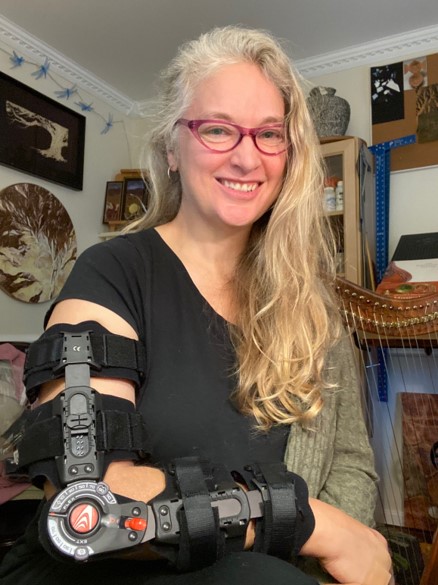
But what happens when something happens to you? When life throws you a curve? Just this week I have learned of two people in my harp world who are recovering from injury – one has suffered a broken arm!
But that doesn’t mean no playing! However, it does mean taking time for injury recovery. There are plenty of ways to continue with music and plenty of reasons to persist*
First the reasons:
And now, the ways:
You can see that focusing on one hand might be a bit of bother while you recover but it can open your eyes to some other important aspects of playing. You might even consider giving it a go before you’re injured! And it can’t hurt to have a plan in the event of injury – and you’ll have something to look forward to!
One final thought on recovering while injured – be very careful to monitor your posture and technique while you’re recovery – no need to develop an overuse injury on top of everything else!
Have you been injured and needed to modify how you play or practice? What did you do and how did it work for you? If you haven’t been injured, do you have a plan just in case life throws you a curve? Let me know in the comments below.
* please don’t do anything dumb – I’m not that kind of doctor, this is not medical advice. If you are recovering from an injury or surgery, follow the instructions of your physician, physical therapist, occupational therapist, and other health care providers. But don’t forget to ask those same providers to help you recover by explaining that you are a harp player and you are keen to get back to your harp – for your mental, emotional, and physical health. They can’t give you useful advice if you don’t tell them you need to play your harp! Be prepared to explain what you need to be able to do while you’re playing.
** Not a paid endorsement and there are lots of books – I like these and I think you might too.
Still a weird year, still an odd time.
But it’s Halloween. No trick or treating. No Halloween gigs or parties. But let’s have some Halloween fun anyway!
How are we going to do that? Well, we’ll do all the things! Well, most of them, modified. We can still have a Harpy Halloween and here are five ways you can try:


How will you have a Harpy Halloween? I know there are more ways than this! Let me know how you celebrate – and if you have a photo, even better – please share. I’ll post mine here later when I have my costume on ???? Looking forward to seeing your celebrations!
I have yet to meet a harp player who is blasé about their harp. There are people who name their harps. Some people talk to their harp. We all love our harps. We do our utmost to care for them. But have we done everything we can to protect them?
(that sounds like one of those cheesy tv commercials for medicine, medical assistance devices, and just about anything you can get 2 for $19.99 + a small additional fee)
Anyway, no matter how much we love our harps, how careful we are to keep them from harm and to pamper them – they are not our children, or our friends. They are, however, unbelievably valuable musical instruments! And as such, you should ensure that your harp(s) are fully insured. You need to insure against all the same things you ensure other valuable things against – theft, damage, or other disasters.
The best way to get started is to talk with your current insurance carrier.
How you insure your harps will be bounded by some other factors. Here are some suggestions on ensuring your insurance is assured. The goal is Goldilocks – not too much coverage, not too little…you want your coverage to be just right:
We never want anything bad to happen to our harps, but they are expensive as well as being important to our daily lives so ensure that assure your insurance! Make sure your coverage matches your usage. Also focus on the policy, the exclusions, etc. You want to feel confident that your insurance will cover you if something happens to your harp!
What’s in your harp case?
In case you’re wondering or interested, these are not compensated product placements – I’m not that smart a blogger. I have Anderson Insurance and I have been happy with the price and the service. I have not ever had to make a claim but they have received good ratings from others that have. They are not the only insurance product available, so do your homework.
One of the best things about teaching is how much you learn from your students. I’ve told you that before and it only becomes more true with each passing day.
Another thing I’m always going on about is practicing. Of course you need to practice. You know that. You know you need to practice most every day. The more you practice, the better you’ll play – you’ll know more, you’ll be more confident, and you’ll just have more to show for your time.
Duh.
But then I have a student say something really profound in its simplicity. And I realize I have to tell you more.
My student and I were talking about “old stuff”. The stuff she knows. The stuff she didn’t really practice any more. Tunes she knows, maybe even loves, but have fallen by the wayside of her mind/list/index card library. The stuff is dying in her repertoire. She was struggling to figure out how to keep those tunes from dying! You have probably also had this experience.
What? How should you structure your practice?
You already know that the longer something you have learned sits, the less well it’s going to go when you give it a dust off. You might be able to pull it out of your head, buy you’re likely to be unimpressed. Or (in my opinion, worse) it’s brilliant…the first time. But when you play it again immediately after, it’s a nightmare! So discouraging.
But if you spend all your time practicing your old stuff, you won’t have time to practice your new stuff. You’ll be stuck. Ugh. How are you ever supposed to move on?
Well, the path forward is through practice. (You knew I would say that).
We often talk about practicing – but we focus on the daily level – the simple, day to day of sitting down, warming up, doing exercise, working through tunes, polishing, and finalizing music before finishing by playing a little something for yourself.
But after you have learned more than about five tunes, this schedule is going to leave you with not nearly enough time to work on every tune based on where in development each tune is.
So you’ll have to go longer each day. Or you can change your focus. Your practice planning will have to expand beyond what you do each day. You will need to think about your practice time across the week. And across the weeks!
Rather than the list we have above, your week plan might include a different focus for each day. That means that while each day holds the basic outline (from warm up to playing for you), the “work” part in the middle of the practice might have a specific concentration. Some examples –
This is just a set of suggestions. You know where you want to go, so build your map for you. Taking this wider view of your practice may help you to be proactive while learning.
Of course, you probably also have your sights set higher. If you’re in a development phase (for instance), you might need to think even wider and build a collection of weeks. But this week’s suggestion will work just fine for learning new tunes to increase your repertoire and help you keep your tunes in your hands.
How would you structure your week? Let me know in the comments!
You always amaze me!
Here we are at the end of the Composition Challenge – and WOW. Just WOW!
First, THANK YOU for all of you who sent compositions, a noodle, an idea. I am so gratified to be entrusted with your art.
For those that sent something but were not ready to share with the world, I encourage you to keep going! And eventually I’d further encourage you to share, share, share! It always amazes me how receptive people are to new music – but you won’t know if you don’t share and ask the question!
And, believe me — I know, that sometimes the deadline sneaks up on us and we are a little bit flat-footed. So if you’re not quite ready to share, but you will be in future – you keep working on it and let me know when you’re ready. I’ll be happy to share my platform with you!
I’d also like to remind you of one really important thing. Like playing, composing requires p-r-a-c-t-i-c-e! We have talked before about ways to get that practice in – improv, noodling, brute force. I guarantee that it gets easier with practice. It does. With practice it will feel less like you’re forcing it. Less like pulling teeth. Less like work. And with time and practice, it will feel more like joy. More like expression. More like breathing. Why yes, it might even begin to feel like music is literally oozing from your pores! But you have to let it.
Here are some of the amazing things some of you were willing to share. Some carefully composed (or carelessly composed!) and some noodling. Some a combination of the two.
The first is titled Noodling BADGE from Barb Costello –
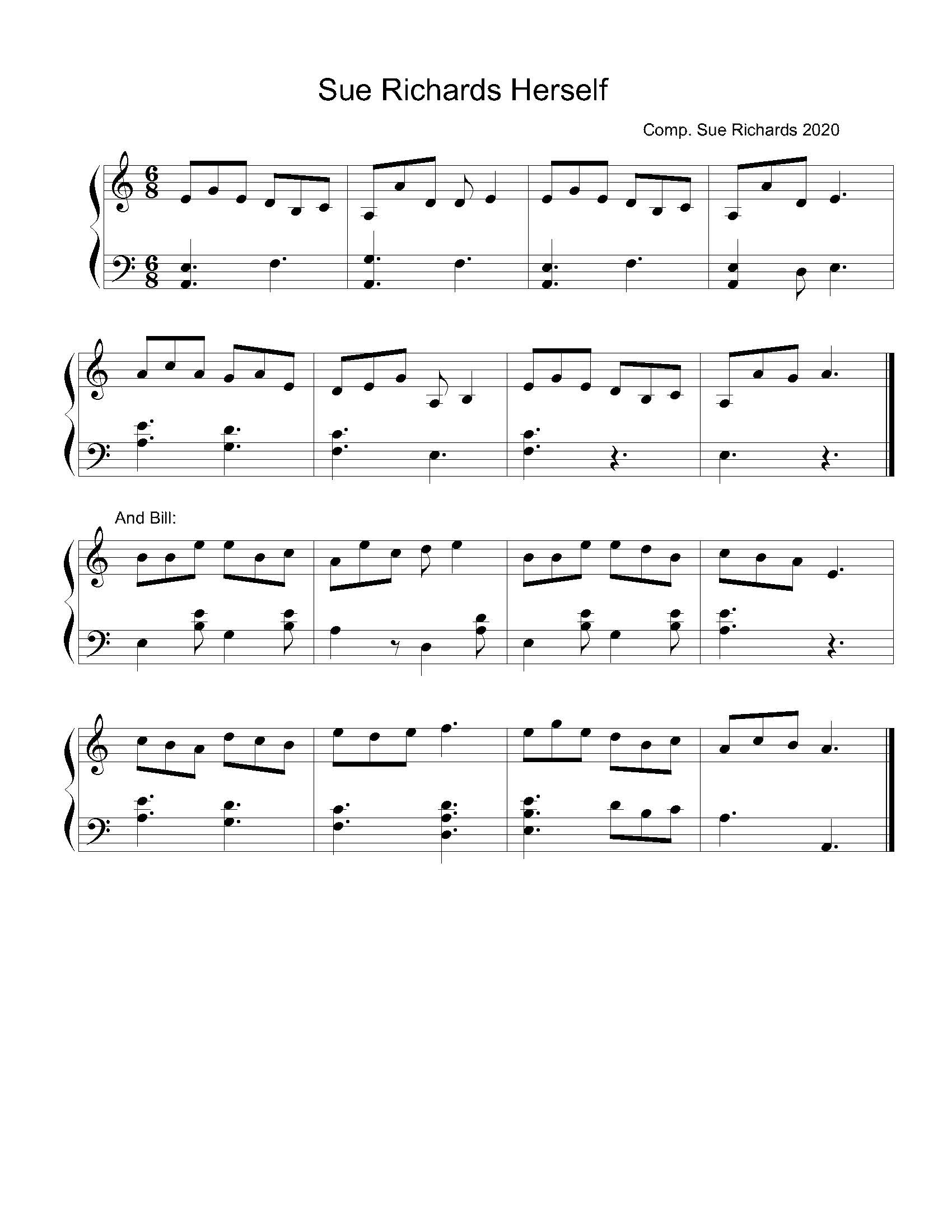
Then we have Sue Richards Herself, using the technique Sue shared and I posted last week –
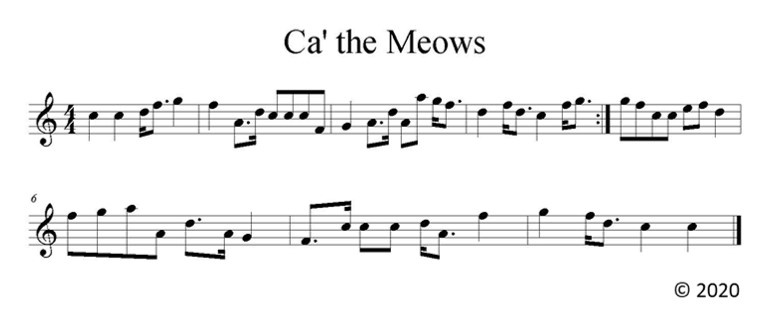
Then we have Ca’ the Meows – a playful take on a classic –
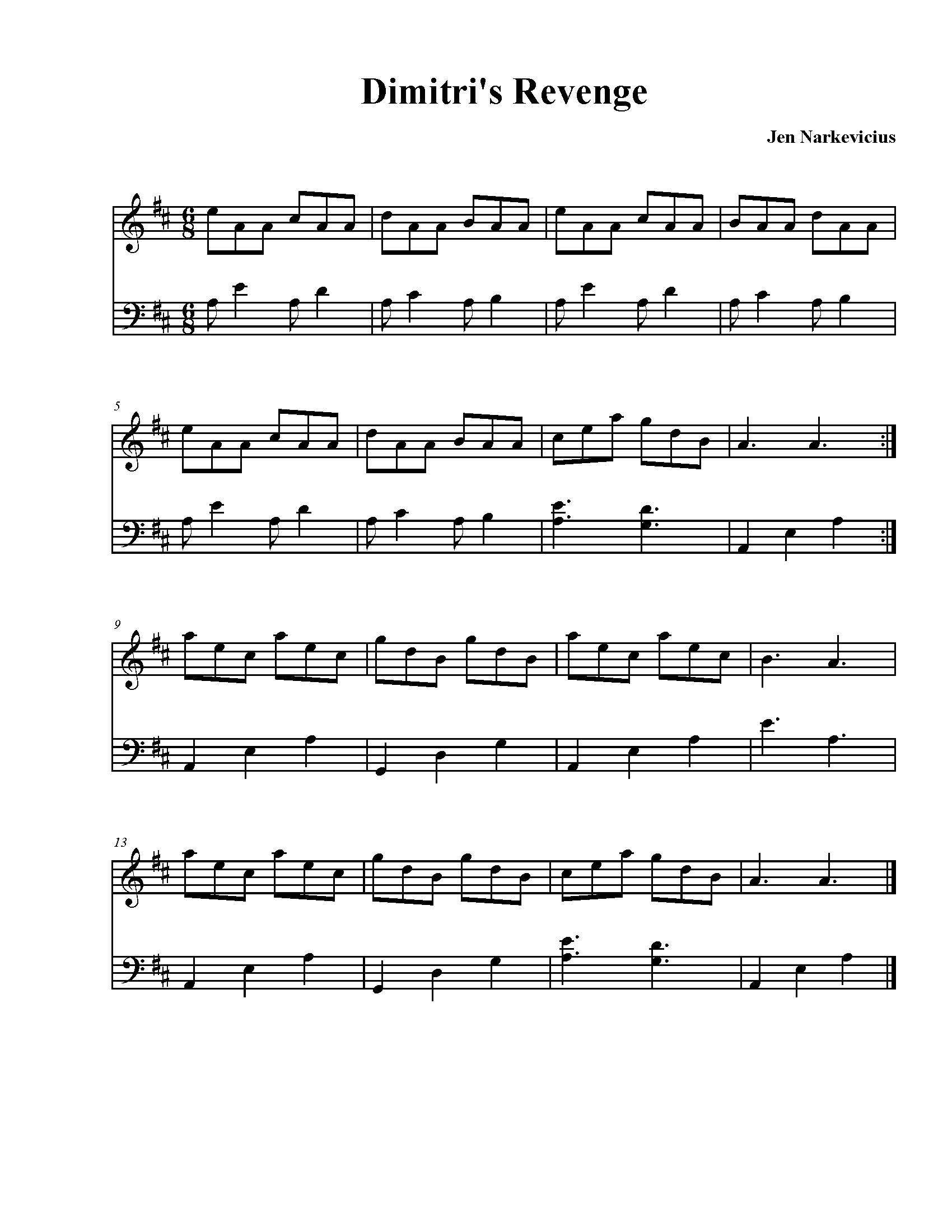
and our last share this week is from me, Dimitri’s Revenge, from my deep and abiding love of Shostakovitch but in a mock Celtoid style –
Be sure to give these pieces a listen and a play through. And PLEASE – leave comments – be lavish with your praise for the music and the sharing (and frankly the bravery!) of the people who contributed. I know all who shared will enjoy your feedback and encouragement. And remember, if you do take these pieces on and begin to play them for others – attribute the work. A little acknowledgement is nice to receive and a little respect is well deserved!
*All rights held by the composers and shared with permission. Please give credit where it is due!
** If you particularly like one of these and have a hard time getting it downloaded, let me know and I’ll think of a solution!
Next week we’ll be sharing our compositions – so exciting!
How’s yours coming along? Some of you have sent me delightful peeks at what you’re working on. Some of you are already done.
What’s that? You haven’t started? You don’t think you can do this? You have no idea how to get started?
!!!
No worries! You CAN do this. Please, please, please do not talk yourself out of giving this a try!
I realize this can be daunting. It can be intimidating. You may sit on your bench repeating over and over in your head a low moan: Ican’tdothisI’mnotacomposerI’mnotabrilliantartistIhavenogreat ideaswhydidIevenconsiderthis! *
Here’s the thing, it might be intimidating because, unlike a writer or a painter, you have few constraints. A writer has only the single sheet of white paper. The painter has only to consider the single canvas.**
But we musicians? We have time and space, pitch and rhythm, tempo and time signature, timbre and technique. We have oodles of variables and we haven’t even started thinking about what shape we might be headed toward!
So, to help you along, I’m going to help you narrow your scope. Remember, you don’t have to write a masterpiece! Just compose something. You’re not Mozart or Shubert or J.S. Skinner! And remember, those guys may be known for their masterpieces, but they all started somewhere! We are all beginners at some point (side note – avoid people who forget this important fact! They are toxic – you can do this!).
Remember the major parts of a tune – you need rhythm and pitch. Find that overwhelming? Start with one and then overlay the other on top of it.
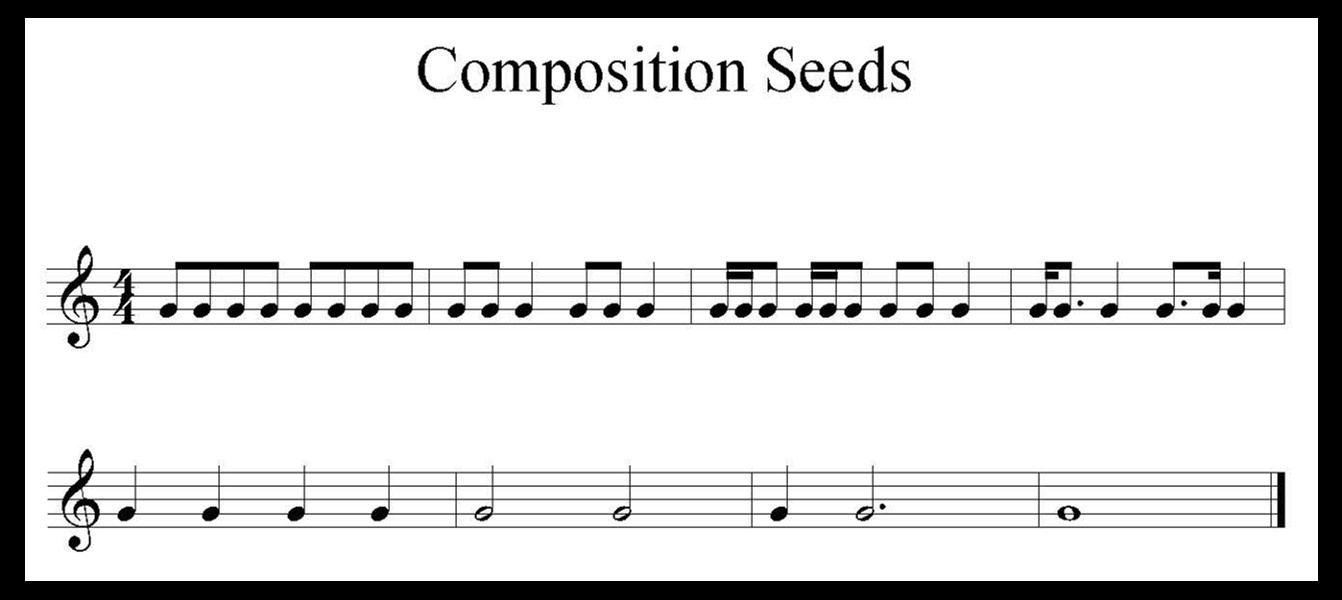
I brought you some rhythm seeds that you could start with if you don’t know where to look – to get your creative juices flowing! Use whichever ones you like or add more – there are literally loads of options! They look like one composition (maybe they are?) but feel free to cut/paste as you like – or throw them all away or pick and mix! It’s your composition!
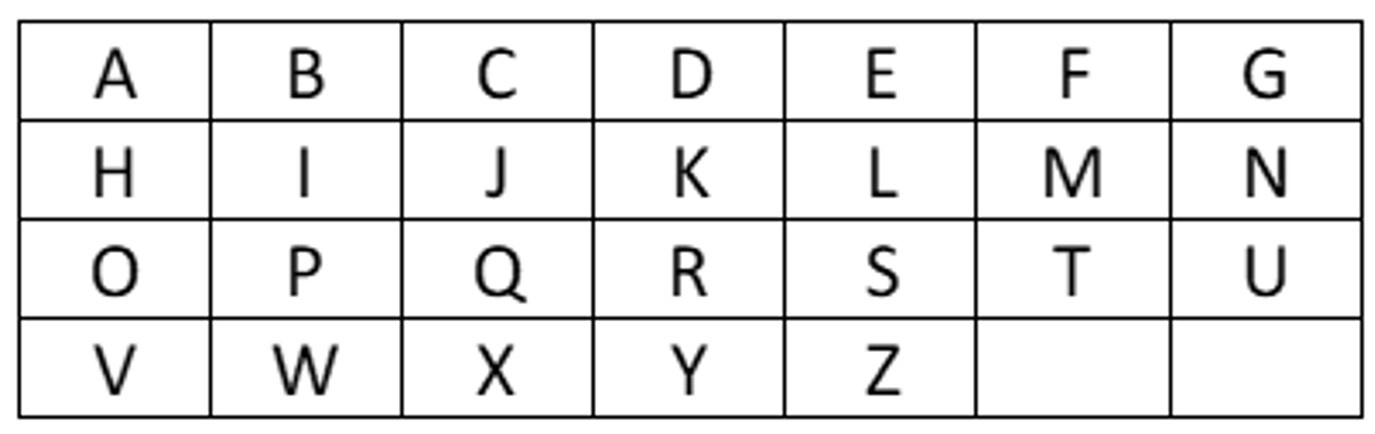
” Recently on the Nordic FB group, we learned from Mark Harmer how to write tunes based on your name. Here’s the thing:
So my name, Sue, is EGE. Richards is DBCAADDE. So I made a tune out of that. You choose the time signature and key, and develop a LH. It’s pretty cool! I’ll try to post the tune I wrote. I also added my husband Bill: BBDD for the second half of the tune. Good luck, be creative!”
If you find you are still getting in your own way, sit down on your bench, BREATHE, turn on your phone recorder (the one with the really big red “DELETE” button which is ever so useful!), and tickle your harp. And when it starts to giggle – you can giggle too. Then you’re having a fun time and you’ll probably enjoy the whole thing (just a little…even if you won’t admit it out loud!).
How’s your composition coming? Remember you can send a video, an audio file, sheet music, a photo of the napkin you wrote it on. Still stuck and want other suggestions? Let me know in the comments below! When you’re ready to send me your composition (which can totally be in draft form, it’s not a race after all!) – let me know in the comments and we’ll get these collected for next week!
Happy Composing!
*I realize this is hard to read (it was a little bit hard to type) but it says, “I can’t do this. I’m not a composer. I’m not a brilliant artist. I have no great ideas. Why did I even consider this!” – All TOSH!
**Yes, gross oversimplification, but the idea isn’t to turn you into a writer or a painter!
Think back. Way back. Think back to February when everything was “normal” (whatever that might mean). We were starting a Composition Challenge. Remember that? And then, in the middle of that came the beginning of where we are now. And we were focused on other things – like staying healthy and safe and helping each other get through the beginning of a hard time we are still working our way through.
Earlier in the year we talked about theory and technique and practice and ways to work up our own compositions and I challenged you to develop a composition of your own and I hoped you’d share them. We talked about noodling (here) and ostinato (here). We crossed into March (little did we know what was coming) and talked about the theory that would help you cultivate noodling into a composition (here). Then we endured a time change and we talked about the utility of noodling when you’re tired (here).
But then we were all consumed with trying to care for ourselves and others and the composition challenge seemed to be a little naff in light of people sickening and dying.
Nevertheless time keeps passing and it occurs to me that we should not have abandoned the challenge. After all, making music is helping us hang on to our sanity. Making music gives us succor and allows us to share with others to make their lives just a little bit better.
Your composition does not need to be complex or complicated. Instead we want to celebrate the process of becoming comfortable with generating musical ideas and putting them together. You can perhaps put together completed ideas, or possibly just fragments. Give ostinato a try (keep in mind that this can be humbling). Poke around the modes and roll them around in your (figurative) mouth, keeping the tasty ones and building from there.
Let’s spend the rest of September working on this. That’s two weeks – plenty of time. It has been my experience that, if you don’t spend all your time telling yourself that this is hard and you can’t do it, you will put out loads of ideas. Some will be keepers. Some will be dreck. And that’s ok! I’d suggest you just set your voice recorder to go (I prop mine up on a music stand) and let your fingers do the walking! Don’t have a voice recorder? Just download a free app and you’re good to go.
But don’t be timid – give it a go. You won’t know what you’re capable of until you try! I’d also like to encourage you to share – this is a warm and generous group and you probably will never find a more welcoming and accepting audience. Perhaps you generate some fragments but don’t feel like you’re successful…but you might find that someone else has also made some fragments – and wouldn’t it be exciting if those fit together to make a tune?!
We’ll finish up Sunday 4th October – send an audio, a video or a score (fancy-schmancy or handwritten!) and we’ll share them soon after – just in time to enjoy for autumn! If you have questions or need some help let me know. Looking forward to what we come up with!
I’ve told you that I am immensely lazy, and I hope you are beginning to believe it! Take the holidays, for instance. My favorite time of year – pretty much the same music year after year. Once you learn it, you are good…f-o-r-e-v-e-r! (cue maniacal laughter).
Holiday music – easy-peasy. Or is it? Same thing with your regular repertoire, of course, but it’s at the holidays it becomes really clear. There are still loads of things you can do wrong – here are just 10:
I know there are many other ways to do it wrong – at the holidays or any time through the year. Let me know in the comments what I forgot…and what I got wrong!